News & Politics

دیشب عرفان از بندرعباس، در میان صدای انفجار، روی خط «برنامه» آمد و گفت: «ما دیگر عادت کردهایم.» این موضوع امشب «برنامه» است: آیا ما به جنگ عادت کردهایم؟

قیمت بنزین با کارت جایگاه یکشبه دو برابر شد؛ از پنج هزار تومان به ۱۰ هزار تومان رسید. اما این گرانی سر پمپ نمیماند؛ به کرایهها، قیمت کالاها، دخل رانندهها و سفرهٔ همهٔ مردم میرسد.
گرانی بنزین کجای زندگی شما را هدف میگیرد؟
ما در «برنامه با کامبیز حسینی» بهدنبال روایتهای واقعی از زندگی مردم هستیم تا صدای واقعی مردم ایران را بازتاب دهیم.

یک شب مانده به چهارمین سالگرد قتل حکومتی مهسا ژینا امینی، گزارشهایی از بازگشت گشت ارشاد و نیروهای لباسشخصی به خیابانها منتشر شده است. خیابانهای شهر شما چه وضعی دارند؟ آیا شهر را قرق کردهاند؟
امشب در «برنامه»، تصویر خیابانها را از زبان خود مردم میشنویم.

در یک ماه گذشته، برای پیدا کردن کدام دارو یا دریافت کدام درمان با مشکل روبهرو شدهاید؟ دارو پیدا نشد، قیمتش چند برابر شد یا بیمه هزینهاش را نپرداخت؟ آیا ناچار شدهاید دارویتان را کمتر مصرف کنید، درمانتان را عقب بیندازید یا برای خرید دارو از پول غذا، اجاره یا مخارج بچهها بزنید؟ امشب در «برنامه با کامبیز حسینی»، صدای شما موضوع اصلی است.

«برنامه» صدای شماست.
اگر در ایران به اینترنت دسترسی دارید، بیایید و مشاهدات خود را بگویید.
ما شما را، بدون نوبت، مستقیم از ایران روی خط میآوریم.
بیایید و روایت خود را برای همیشه ثبت کنید.
تاریخ با صدای شما نوشته میشود.

ساندیتایمز گزارش داده است دو پنتهاوس لوکس مرتبط با شبکهٔ مالی مجتبی خامنهای، در ساختمانی مشرف به کاخ کنزینگتون لندن، برای فروش گذاشته شدهاند؛ دو ملکی که مجموعاً نزدیک به ۳۶ میلیون پوند خریداری شدهاند.
کامبیز حسینی در «برنامه» به این موضوع میپردازد.

هر روز صبح با خبر اعدام بیدار میشویم. امروز، ۱۳ مهر، علیرضا سپاهی و علیرضا رئیسی، دو متهم پروندهٔ «میدان علیخانی» اصفهان و از معترضان خیزش دی، در زندان دستگرد اعدام شدند. علیرضا سپاهی یک روز پیش از اعدام، در زندان با نامزدش، مهشاد کشانی، ازدواج کرد؛ زنی که خودش با حکم پنج سال زندان روبهروست. حدود دو ماه پیش، قرار بود علیرضا را همراه پسرعمویش اعدام کنند، اما او پیش از انتقال سکته کرد. پسرعمویش همان روز اعدام شد و علیرضا، ۶۹ روز بعد و یک روز پس از ازدواجش، اعدام شد.

این هفته در «برنامه با کامبیز حسینی»، ماراتن تریبون آزاد برگزار میشود؛ تا پنجشنبه، موضوع برنامه را شما تعیین میکنید!
اگر فقط فرصت داشتید یک جمله به یک ایران بگویید، چه میگفتید؟

اگر فقط یک جمله فرصت داشتید با ایران حرف بزنید، چه میگفتید؟ «برنامه» امشب، تریبون آزاد شماست. تاریخ با صدای شما نوشته میشود.

این هفته در «برنامه با کامبیز حسینی»، ماراتن تریبون آزاد برگزار میشود؛ از امشب تا پنجشنبه، موضوع برنامه را شما تعیین میکنید!
اگر فقط فرصت داشتید یک جمله به یک ایران بگویید، چه میگفتید؟

موضوع این قسمت از «برنامه»، بازگشتهای گزینشی و معاملات امنیتی است. میپرسیم: چرا حق بازگشت به وطن به امتیاز تبدیل شده است؟ قانون اساسی، تابعیت ایران را حق هر ایرانی میداند.
امشب در «برنامه با کامبیز حسینی» از فاصلهای میگوییم که میان آدمها و خانهشان افتاده است.

این هفته در «برنامه با کامبیز حسینی»، ماراتن تریبون آزاد برگزار میشود؛ تا پنجشنبه، موضوع برنامه را شما تعیین میکنید!
اگر فقط فرصت داشتید یک جمله به یک ایران بگویید، چه میگفتید؟
💎 Help us expand the coverage! Subscription starts from just $4.99! Get 50% OFF full access to the map + exclusive strategic updates: https://www.rfunews.com/pricing
Today, the biggest news comes from the Russian Federation.
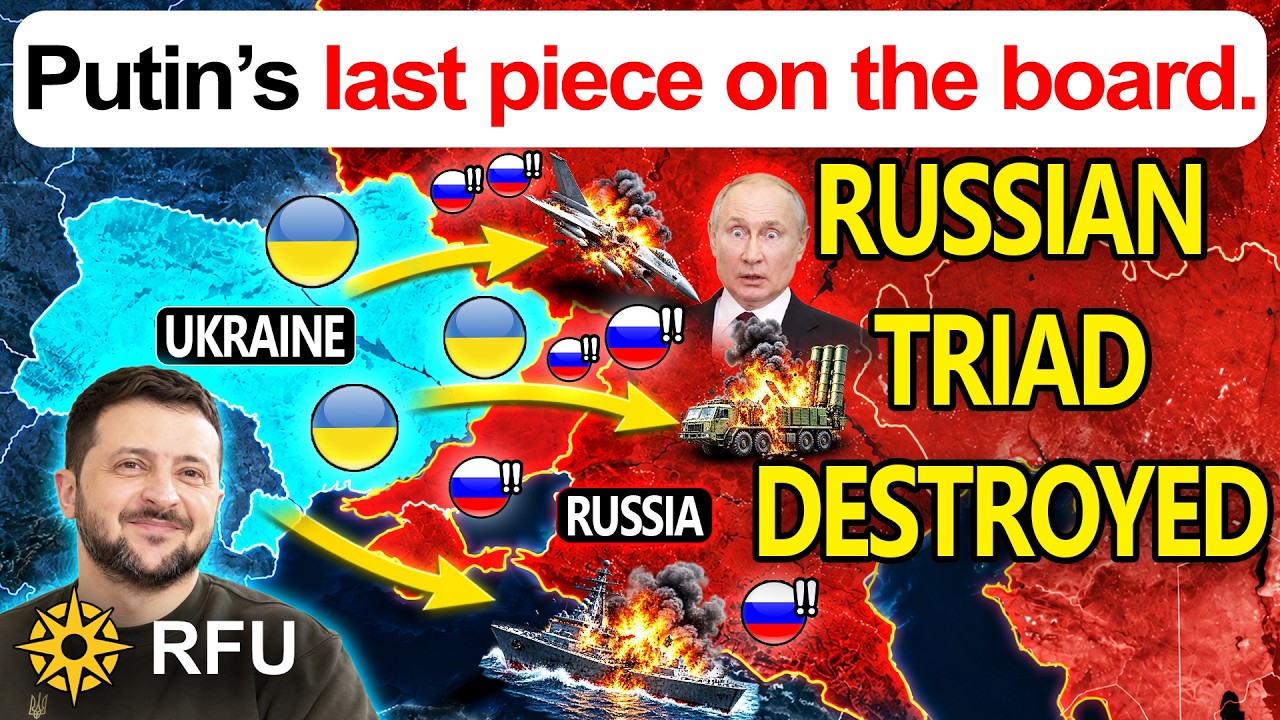
Here, Ukraine’s Navy reported that it struck the Russian frigate Admiral Essen in the port of Novorossiysk with a Neptune missile. The Admiral Essen is a carrier of Kalibr cruise missiles, which Russia uses to launch long range strikes against targets in Ukraine. The same operation also hit two other Kalibr missile carriers, a Buyan M class corvette and the frigate Admiral Makarov, with the Makarov suffering damage to its port side. These attacks come after Ukraine had already targeted both frigates in August, demonstrating that the Russian Black Sea Fleet is facing repeated attacks. According to the Ukrainian Navy, the purpose of these operations is to systematically degrade the Russian fleet’s ability to conduct combat operations, particularly its capacity to launch missiles against Ukraine. The naval strikes are also part of a much broader Ukrainian campaign aimed at destroying the platforms Russia relies on to attack Ukrainian cities.
This strategy was demonstrated again in an earlier operation during which Ukrainian drones travelled eight hundred kilometers to reach Engels airbase, where they struck a Russian Tu ninety five strategic bomber. Satellite imagery captured the aftermath of the kamikaze drone attack, indicating that the aircraft was destroyed in the strike. Another Tu ninety five that had been damaged in an earlier Ukrainian strike was also visible at the airbase, proving the growing success of these strikes. Ukrainian President Volodymyr Zelensky confirmed that SBU Alpha special forces carried out the operation against the bomber, which also serves as a carrier for Russia’s long range cruise missiles. These bombers are particularly important targets because they can launch cruise missiles from hundreds of kilometers away, allowing them to attack Ukrainian cities while remaining far outside the range of Ukrainian air defense systems. By reaching the aircraft while they are still on the ground, Ukraine can therefore bypass that distance advantage and directly attack one of the platforms Russia depends on for its long range missile campaign.
To further complement these strikes, Ukrainian forces also targeted an Iskander M ballistic missile launcher on Russian territory near the Ukrainian border. The targeted position was used to launch Iskander and Zircon missiles towards Ukraine, making it a particularly important target for Ukraine. Unlike fixed missile installations, these launchers can rapidly relocate along Russia’s road network and change firing positions, making them much harder to detect and destroy. Successfully locating and striking one therefore demonstrates that Ukraine can reach Russia’s mobile missile forces despite their ability to relocate and change firing positions.
This strategy is becoming increasingly important because Ukraine cannot afford to rely solely on intercepting incoming missiles, which requires expensive interceptors available only in limited quantities. By attacking the platforms that launch missiles instead, Ukraine can prevent attacks before they begin. Destroying a bomber, damaging a warship, or eliminating a mobile missile launcher not only removes an immediate threat, but can also reduce Russia’s ability to carry out repeated strikes and ease the enormous pressure placed on Ukraine’s air defense network. According to Bloomberg, Putin is considering heavier ballistic missile strikes against Kyiv, aiming to eventually launch as many as two hundred missiles in a single attack. Russia is currently capable of launching around seventy seven missiles simultaneously, meaning that Moscow is seeking to dramatically increase the number of missiles it can fire. This is why Ukraine’s strategy of hunting down the launch platforms themselves is becoming increasingly significant.
Overall, Ukraine is trying to change the economics of the missile war, which Russia uses to destroy Ukrainian cities. Russia can manufacture and launch more weapons, but losses reduce available launch capacity and complicate preparations. If Ukraine can repeatedly force Russia to hide or relocate its strike systems, Moscow’s missile arsenal becomes less useful. The real objective is therefore not simply interception, but making Russia’s long range strikes difficult to sustain.
💎 Help us expand the coverage! Subscription starts from just $4.99! Get 50% OFF full access to the map + exclusive strategic updates: https://www.rfunews.com/pricing
Today, there are important updates from the Pokrovsk direction.
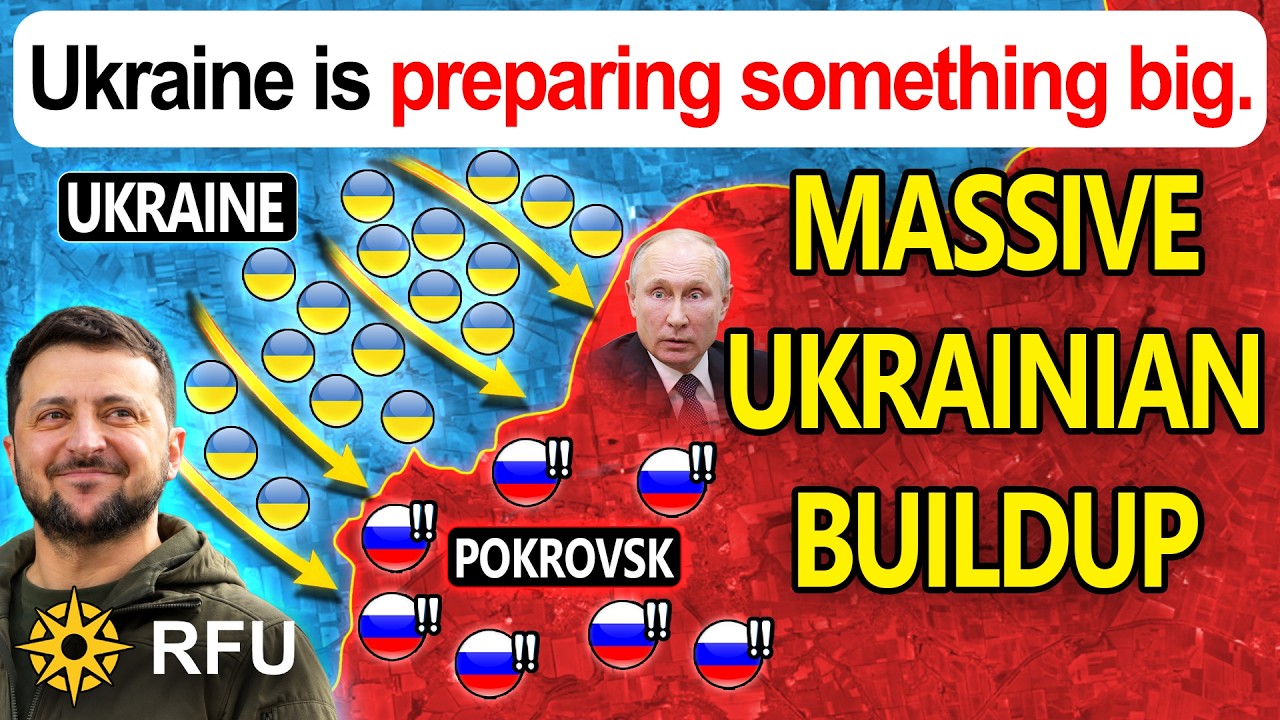
Here, a significant Ukrainian force concentration is taking shape around Pokrovsk as the Ukrainian command prepares to counter Russia’s attempts to reinforce its infiltrations.
Ukraine’s Two-Hundred-Twenty-Fifth Separate Assault Regiment has now been placed under the operational control of the Seventh Rapid Response Corps of the Air Assault Forces. This does not permanently incorporate the regiment into the corps. Instead, it will conduct missions inside its area of responsibility directly under corps command, eliminating coordination problems created when assault formations operated inside the sector without answering to the same headquarters.
This is particularly significant because it follows another similar reinforcement, as you may remember from a previous report. The Four-Hundred-Twenty-Fifth Separate Assault Regiment Skala was transferred under the operational command of the First Azov Corps, with several battalions and the regimental command moving into Azov’s sector during late August. Skala has already participated in clearing operations, while Ukrainian commanders report improved coordination and reduced personnel losses. Both the First Azov Corps and Seventh Rapid Response Corps operate across overlapping parts of the broader Pokrovsk sector, with the two powerful corps formations now being reinforced with specialized assault regiments precisely as Russian activity intensifies north of Pokrovsk.
The immediate catalyst for this decision is the expanding grey zone Russia has created toward Dobropillia. Russian infiltrators have penetrated deep behind the conventional frontline, with groups reportedly reaching Bilozerske, approximately five kilometers north of Dobropillia. This does not mean Russia controls the intervening territory, as Russian glide-bomb strikes against locations inside this area themselves indicate a lack of stable control there. However, dispersed infiltrators are attempting to create footholds through which larger assault formations can subsequently move, which requires immediate reaction from the Ukrainian units defending the area to eliminate this threat.
For now, Russian groups continue to encounter prepared Ukrainian defensive obstacles, as geolocated Ukrainian drone footage shows Russian infantry attempting to cross fortification lines near Dobropillia before being attacked by Ukrainian drones. Trenches, barbed wire, and dragon’s teeth slow soldiers precisely when they are most exposed, and every additional minute spent trying to overcome obstacles provides Ukrainian drone operators another opportunity to launch FPV’s and destroy the enemy before they reach Ukrainian positions.
However, Azov reports that Russia is gathering reserves for another offensive attempt, as Russian troops continue infiltrating, supported by an enormous drone presence, and through this they’re trying to outflank both Dobropillia and Kostiantynivka-Druzhkivka. Ukrainian troops in the area reported approximately three hundred Russian drones operating within one area of responsibility during a single day.
That makes clearing infiltrators considerably harder, as Ukrainian assault troops searching forests and settlements must simultaneously evade Russian FPV’s and reconnaissance drones. Russia has also reportedly moved artillery closer to the frontline, accepting greater vulnerability to Ukrainian counterbattery attacks and drones in exchange for stronger immediate fire support for the infiltration attempts.
The Russian objective in the Pokrovsk direction is to convert the grey zone into consolidated control before pushing directly toward Dobropillia and Druzhkivka. Ukraine, however, is preparing to contest exactly that transition, as the transferred units to reinforce the corps are experienced assault formations capable of systematically clearing dispersed Russian groups and holding a coherent frontline. This would resemble the pattern preceding earlier Ukrainian counteroffensives this year: destroy infiltrators, consolidate the grey zone, secure logistics and drone corridors, and only afterward transition toward larger offensive actions.
Overall, Russia is accumulating troops, drones, and artillery for another attempt to turn infiltration into a breakthrough in the Pokrovsk direction. However, Ukraine’s response is increasingly visible, as elite formations are being concentrated under corps-level command to stop that breakthrough before it consolidates. The arrival of another assault regiment indicates Ukraine is preparing not merely to contain Russian infiltration, but to clear the contested territory, restore control, and potentially create the conditions for the next Ukrainian counteroffensive.

💎 Help us expand the coverage! Subscription starts from just $4.99! Get 50% OFF full access to the map + exclusive strategic updates: https://www.rfunews.com/pricing
Today, the most important news is coming from the European border.
Here, Russia has begun massively intensifying its strikes on the Ukrainian border with its neighboring Nato allies. Aside from disrupting crossings and transport of civilian and military logistics, the most recent strike nearly killed several prominent Western figures. A train carrying former Western political leaders returning from a conference in Kyiv nearly escaped the Russian strike, with a drone hitting the train only a few minutes behind it. Ukraine’s national railway company stated that the likely target of the Russian drone strike was indeed the Western diplomats, as the departure time of their train had been switched at the last moment to avoid such an exact strike. While the train that was hit had been evacuated as soon as Russian drones approached and no civilians were killed, the attempted murder of former Swedish and British prime ministers by drone strike is a new level of escalation.
Recently, Russian provocations against Nato have been massively intensifying, both in number and severity. Russian strikes are now frequently landing within a few hundred meters of Nato territory, and airspace violations by Shahed drones are happening on an almost weekly basis. Notably, geopolitical experts believe that this is by design; Russia wants Nato to respond. They argue that Putin is looking for a defining Nato action against Russia, to create a rally-around-the-flag effect and use it to garner support for a new round of mobilization. Notably, the Kremlin is deathly afraid of calling up another round, and has taken extensive measures to prevent and quell unrest, to the point of experimenting with Iran-style nationwide internet blackouts to undermine protesters’ ability to coordinate. However, if Nato attacks Russia in some way, major unrest against a mobilization can be avoided if the Kremlin plays their cards right, and it is becoming more transparent by the day that this is exactly what they intend to provoke.
The most notable attempt of this was the failed kamikaze drone strike on a Ukrainian cargo plane at Leipzig airport. The aircraft was meant to transport military supplies gathered at a depot near the city, and fly it to the border with Ukraine for further transportation. The saving grace occurred when the FPV drone carrying eight-hundred grams of explosives failed to detonate and crashed against the wing of the plane. Later, a suspected reconnaissance drone investigating the failed attack crashed against another aircraft that was diverted after the earlier drone wreckage was found and the airport was closed. Despite the tame official response of the German government, closing a consulate, Russian culture house, and establishing a special police unit to counter drones and protect critical infrastructure, Lavrov called the response the beginning of a real war, adding that Germany is now moving toward war with Russia. The disproportionality of the Russian reactions only further underscores the theory that the Kremlin is trying to fabricate an excuse for mobilization that the Russian public will accept.
Additionally, Bulgaria is investigating the second major fire at a weapons storage facility run by Bulgaria’s largest military producer, which also sells weapons to Ukraine. This is the second fire and explosion to hit an EMCO facility in recent weeks, as investigations center around uncovering ties with Russia. In turn, Romanian intelligence recently stated that they spoiled a Russian sabotage operation targeting Romanian and Nato military bases, headquarters, and critical infrastructure, along with another Ukrainian Antonov transport plane. Danish intelligence also released a report detailing how Russia is actively preparing sabotage operations against defense manufacturers and military facilities inside the country. Lastly, at the start of the month, an unknown intruder broke in and set fire to a Polish drone factory, with Prime Minister Tusk stating there is no doubt that it was sabotage, and intelligence services investigating Russian involvement.
Overall, while the Russian plan to trigger a Nato response and justify a mobilization to Russian society is extremely clear, the right course of action for the West is not. The attacks that happened only in the last two weeks are subversive and indirect; the Leipzig attack targeted a Ukrainian plane on German territory, not directly a Nato plane. Cyber, stabotage, and intelligence operations are carried out by third parties. The near-miss on the delegation train at the border did not include official diplomats or leaders, but only former politicians and unofficial VIP’s.
💎 Special Offer: starting from just $4.99! Get 50% OFF full access to the map + exclusive strategic updates: https://www.rfunews.com/pricing
Russia’s worsening air-defense crisis is now forcing the Russian command to urgently put ordinary civilians in improvised military units, sharply increasing the number of deadly accidents, which we will review in this report. Authorities in the Krasnodar Region have announced that employees of local enterprises will be recruited into mobile fire groups tasked with protecting factories, infrastructure, and other rear-area targets from Ukrainian drones. Workers will reportedly receive fifty-thousand rubles, or around five-hundred-and-thirty-seven euros and sign contracts with the Russian Ministry of Defense, although officials insist they will not be deployed to active combat zones. The measure reflects Russia’s shortage not only of air defense missiles and functioning air-defense systems, but also of trained personnel capable of operating them across the country’s enormous territory.
However, the arrangement contains a serious risk, as once a civilian signs a Defense Ministry contract, that person falls under military authority, regardless of verbal promises from regional officials. More importantly, mobile fire groups would usually require careful selection, discipline, communication and coordination, and extensive weapons training. Simply giving factory employees rifles or heavy machine guns and ordering them to shoot at drones is unlikely to create an effective defense. Instead, poorly trained crews waste ammunition, fire into populated areas, or bring down aircraft directly onto the civilians they are supposedly protecting.
Russia’s desperation is understandable because Ukrainian attacks are becoming relentless, and even Russian sources admitted that approximately three thousand Ukrainian drone and missile strikes were observed during a single week. The geography of these raids is also expanding beyond Crimea, border regions, and Moscow toward the deep Russian rear. At the same time, Ukrainian drones are becoming faster, more resilient to Russian electronic warfare, and increasingly difficult to stop, meaning improvised mobile teams with almost no training are already struggling against threats beyond their capabilities.
The catastrophic consequences were demonstrated on a crowded beach in Gelendzhik. Russian air-defense personnel fired at and shot down an incoming Ukrainian drone without considering where the wreckage would fall. The aircraft crashed directly among beachgoers laying on the sand and exploded in a massive fireball. Seven people, including three children, were reportedly killed, while more than sixty others were injured. Russian officials accused Ukraine of deliberately targeting civilians, but videos filmed by bystanders contradicts this, and clearly shows how Russian air defense had brought the drone down onto the beach with complete disregard for the consequences.
The incident became even more disturbing because the mobile group was reportedly protecting not an essential military facility or major industrial site, but one of Vladimir Putin’s residences near Gelendzhik. Russian civilians therefore died because an inadequately trained crew prioritized preventing damage to Putin’s vacation home over calculating the danger to hundreds of people below. After the Russian accusations, Andriy Kovalenko, head of the Ukrainian Centre for Countering Disinformation, said in a statement that it was Putin who killed these Russians, and had he not started the war, the strikes on Ukraine, and forcibly put untrained personnel in charge of heavy weaponry, these people would still be alive.
Russian training footage demonstrated how reckless these improvised formations can become, as during one exercise, a mobile fire group mounted a heavy machine gun onto a truck. The weapon was originally designed for the Mi-Twenty-Four helicopter and was not intended for manual ground operation. Its recoil and weight caused a soldier to be thrown from the vehicle, the gun shooting uncontrolled in all directions and nearly turning the exercise into another fatal incident for everyone involved.
In Russian-controlled Sevastopol in Crimea, the danger came directly from an armed serviceman, who was given a weapon without proper selection. He opened fire on fellow soldiers, killing one and wounding another, before shooting civilians as well. Three civilians were killed and three more wounded before the attacker was detained. The event demonstrated what can happen when armed personnel are deployed without proper screening, combat, or psychological preparation.

🔴 YOU ARE MISSING HALF OF OUR VIDEOS! Subscribe to unlock all our reports and support our work: https://www.youtube.com/channe....l/UCcNB1tZYpeDetqCad
Today, there is important news from Ukraine.
Here, as Starlink internet access remains cut off, Ukraine is demonstrating that it has enough capabilities so that it is not out of the fight just yet. As the cutoff has severely disrupted high-speed drone controls, Ukraine’s domestically developed missiles just delivered the most devastating strike against Russian airbases this year.
In the middle of the night, Russian observers reported a large number of high-speed missiles flying into Russian territory, as air raid warnings were declared across numerous regions. The target, Russia’s major Borisoglebsk military airbase in the Voronezh region, housing the largest component of Russia’s military aircraft launching frontline glide-bomb strikes against Ukraine. Footage shows major fires lighting up the clouds in the night sky. Local residents filmed major flashes of light followed by loud explosions coming from the direction of the airfield. Finally, footage was published showing one of the impacts itself, with a massive fireball climbing up into the sky, suggesting that a major munitions depot was hit among the strikes.
In the aftermath, satellite footage was released showing that the damage was far more extreme. Six Russian Su thirty-four fighter-bombers had been destroyed in the blasts. Four wrecks are visible lining the tarmac, while who more fire marks on the asphalt suggest that two more were caught in the blast and were severely damaged. These aircraft are key in launching Russian glide bomb strikes against Ukrainian frontline positions. They are able to carry the most out of all Russia aircraft simultaneously, and are therefore used most extensively as well. As Ukrainians are unable to counter Russian glide bombs without further-reaching missiles, the only way for Ukraine to disrupt the strikes is by targeting the aircraft and the bombs while on the ground. And the destruction of six of these aircraft is a significant loss for Russian air-support capabilities.
For the strike, Ukrainians used their own domestically produced Neptune missile systems. Ukraine has long used the missiles that sunk the Russian Black Sea flagship the Moskva in ground-attack roles as well, proving itself an effective weapon against the highest Russian targets. Just like these missiles, the Starlink cutoff recently imposed on Ukraine does not completely dismantle Ukraine’s long-range strike capabilities. The missiles used for these strikes are either guided through a ballistic trajectory, have inertial guidance systems, or use radar-homing to lock on to their targets, not relying on any Starlink connection. Ukraine’s long-range drones similarly rely on a multitude of AI systems, pre-programmed flight paths, varied satellite constellations, and sometimes even high-altitude balloon relays for guidance instead of Starlink. It’s also important to understand that long-range strikes are mostly conducted against static targets, meaning that the drones or missiles do not need to be piloted by Ukrainian operators using Starlink to fly to their targets, unlike most mid-range strike drones and interceptor drones. This is where the disruption has the most effect. Not against Ukrainian strikes against Russian oil and energy infrastructure, but in protecting civilians against Russian Shahed terror attacks and in undermining Russian offensives by the mid-range strikes. Because long-range strikes are now the only thing Ukraine has left to pressure Russia, Zelensky has officially lifted the ban on refinery strikes, which was initially imposed to precisely to approach Trump’s dealmaking efforts.
Overall, while Ukraine had halted strikes on Russian energy facilities for three days at Washington’s request, Russia continued striking Ukraine’s energy infrastructure and cities, prompting Zelensky to state that enough is enough and cancel the order. With Starlink speed limitations only affecting Ukraine’s ability to defend itself, the long-range strikes will continue with renewed determination. Ukraine has plenty of domestic systems that will continue to strike Russia’s airfields, ammunition depots, and refineries deep inside Russian territory independent of Washington’s imposed limitations on Starlink. Zelensky added that for Ukraine, this is not a game, deal, or politics, but rather the continued survival of their country and its citizens.

🔴 YOU ARE MISSING HALF OF OUR VIDEOS! Subscribe to unlock all our reports and support our work: https://www.youtube.com/channe....l/UCcNB1tZYpeDetqCad
Today, there are important updates from the Komar direction.
Here, Ukrainian forces continued to break through and advance even further south of Komar, building on their previous advances and foothold in the town. While an information blackout from the Ukrainian high command is still in place for operational security reasons, Russians are reporting that Komar itself is still contested and their forces are trying to hold their ground and counterattack amid fierce fighting. Because of this, the Ukrainian commanders decided to bypass the village and turn the direction of their attack south. Ukrainian forces advance west of the Mokri Yali River, which protects their left flank from Russian counterattacks. The Ukrainian soldiers are pushing toward Fedorivka and Vesele, while several Russian sources claim Fedorivka is already under Ukrainian control. Further south, Ukrainian forces are using the newly captured village of Shevchenko as a springboard and advancing toward Burlatske. Russian sources are reporting Ukrainian reconnaissance units operating near Burlatske, probing Russian defenses and mapping their positions in and around the settlement before attacking it. As a result of these new advances along two vectors, Ukrainians are now only seven kilometers away from Velyka Novosilka.
This is critical for the Russians because before the Ukrainian counteroffensive in the Dnipropetrovsk area, the frontline was twenty-one kilometers away from Velyka Novosilka, which meant it was mostly out of the range of Ukrainian tube artillery. Now, Ukrainian artillery units can strike targets inside Velyka Novosilka and the logistical routes that the Russians are using to supply the town. Notably, Velyka Novosilka is the biggest town in this sector, which naturally serves as a logistical hub for the Russians. They can accumulate forces, armored vehicles, ammunition, and other supplies inside the town and redistribute them to their frontline units. Now, the town is fully in range of Ukrainian artillery, FPV, and bomber drones, which can disrupt Russian logistics. This will cause supply shortages northwest of the town, degrading the remaining Russian soldiers' ability to defend against ongoing Ukrainian counterattacks. More importantly, Ukrainian forces can now advance even further and directly threaten Velyka Novosilka.
If we take a look at the topographic map, we can see that Ukrainian forces are now partially controlling the high ground northwest of Velyka Novosilka. From this position, Ukraine can spread its forces out and capture the approaches to the town on the surrounding heights. As Velyka Novosilka is located in the lowlands, Ukraine can utilize the high ground to its advantage. The high ground serves as an excellent base for drone operators, who can launch their drones from a superior position, which provides better range through less battery consumption, better signal connection, and fewer blind spots.
After preparatory strikes by artillery, logistical lockdown by drones, and strong electronic warfare support to counter Russian drones, Ukrainian forces would be able to use the high ground and launch attacks from it. If their attacks continue to yield results south of Komar, Ukrainian forces would be able to attack Velyka Novosilka from the north and west at the same time, dividing the defenders' attention.
Overall, the real significance of these advances is that Ukraine is threatening to dismantle the Russian defensive system around Velyka Novosilka before launching a direct assault on the town itself. By targeting supply routes and securing the surrounding high ground, Ukrainian forces can gradually make it harder for Russian troops to reinforce their positions, coordinate their defense, and withstand further attacks. If Ukraine can maintain this momentum, Velyka Novosilka could become not just another battlefield objective, but a vulnerability that forces Russia to reconsider its entire position in this sector.

🔴 YOU ARE MISSING HALF OF OUR VIDEOS! Subscribe to unlock all our reports and support our work: https://www.youtube.com/channe....l/UCcNB1tZYpeDetqCad
Today, the biggest news is coming from the Black Sea.
Here, four commercial vessels have now been struck across two separate waves of drone attacks near Bulgarian waters, marking a major escalation in Russia’s expanding campaign against shipping in the Black Sea. In the latest attacks, the Malta flagged Chelsea Three was struck by three aerial drones roughly thirty three kilometers from the Bulgarian coast, forcing all fifteen crew members to evacuate, with five needing medical treatment. A second vessel was attacked roughly thirty one kilometers from shore and sank, with Bulgarian rescue forces dispatched to the area. These strikes came only one week after another two merchant vessels were attacked in Bulgaria’s maritime economic zone, when one ship sank and another caught fire, leaving sailors injured and forcing another large rescue operation. The latest strikes occurred inside Bulgaria’s exclusive economic zone, where wartime military operations can be legal, but only around ten kilometers beyond Bulgaria’s territorial waters, placing active Russian attacks extremely close to the sovereign territory of a Nato member. Russia’s campaign against maritime traffic connected to Ukraine has now produced four strikes around the maritime zone of a Nato member in little more than a week, bringing active wartime attacks directly toward Bulgaria’s coastline and forcing Sofia to respond. With these strikes occurring only thirty kilometers from the Bulgarian coastline, the real danger to the Nato country was immense, with Russia showing little due regard to neutral vessels’ operations.
These attacks come after Russia spent months intensifying a campaign designed to isolate Ukraine from maritime trade by making every voyage to its Black Sea ports increasingly dangerous. Russian forces have repeatedly targeted ships, port infrastructure, the Danube ports, and transport links connecting the Odesa region with the rest of the country, while Russian sources themselves describe almost daily strikes against the Greater Odesa port cluster throughout September. The pressure has already driven up shipping and insurance costs and forced vessels to search for safer routes farther west, with some gathering near Romania to increase their distance from Ukrainian ports and areas under regular Russian attack. Yet the latest vessels struck near Bulgaria had not even departed from Ukrainian seaports, with Chelsea Three sailing from Turkey toward the Danube when it was attacked. Russia’s effort to choke Ukrainian maritime traffic is therefore reaching commercial vessels beyond the Ukrainian port system itself, while those ships are operating around the maritime zone of a Nato country.
Bulgaria has now moved from monitoring the attacks to confronting Russia directly, summoning Russian ambassador Eleonora Mitrofanova after an emergency meeting of the country’s Security Council. Prime Minister Rumen Radev described the strikes as unacceptable and announced that Sofia is seeking assistance from both the European Union and Nato to determine the drones’ origin and strengthen surveillance of Bulgarian airspace and the Black Sea coast. Radev also opened talks with Nato Secretary General Mark Rutte, making the attacks a direct subject of coordination between Bulgaria and Nato. The previous wave of strikes had already pushed Sofia to approve the emergency purchase of five additional air defense systems under the European Sky Shield Initiative, showing that these incidents are already changing Bulgaria’s military posture along the coast. Investigators have not yet established conclusive evidence identifying the drones, yet the diplomatic response has already centered on Moscow and the Bulgarian government is preparing stronger defenses against further attacks. After four commercial vessels were struck in little more than a week, every new incident now increases the pressure on Nato to expand surveillance and air defense coverage over the western Black Sea.
Overall, repeated attacks around Bulgaria are pushing Nato toward tighter protection of commercial shipping across the western Black Sea, with more surveillance, coastal air defenses, and faster tracking of incoming drones. As Sofia strengthens its defenses and coordinates more closely with Nato, Russian drones operating near Bulgarian waters will face a denser network of sensors and interceptors covering the routes used by civilian vessels. Further attacks will give Bulgaria and other Black Sea members stronger reasons to expand patrols and air defense coverage, bringing Nato military assets closer to the areas where Russia is conducting its maritime campaign. Russia’s effort to isolate Ukraine at sea is therefore creating the conditions for a larger Nato presence along the same shipping routes Moscow is trying to disrupt.

🔴 Our interactive news map: https://www.rfunews.com/map
🔴 Subscribe to unlock full access to the map + exclusive strategic insights: https://www.rfunews.com/pricing
In the skies above the frontline, the Ukrainian air force unleashed a devastating series of J-dam bombardments on Russian positions. After securing one of the largest J-dam resupply packages since the start of the war, the Ukrainian air forces stopped rationing them and started conducting constant strikes on the Russian lines.
Recently, the United States has approved a major three-hundred-seventy-three-million-dollar package that includes more than one thousand five hundred J-dam bombs for Ukraine. The package will be financed through a combination of Ukrainian funds and monetary contributions from European Nato countries. Particularly important is that this is the Extended Range variant that adds deployable wings that allow bombs to glide up to eighty kilometers after release, combining GPS and inertial navigation systems, enabling the bombs to accurately strike fixed targets in any weather conditions. This enables Ukrainian aircraft to attack Russian positions from much safer distances while remaining outside many Russian frontline air defense ranges.
With more bombs secured, Ukraine has increasingly stepped up its J-dam campaign on Russian command-and-control infrastructure and logistics facilities to break the backbone of Russian battlefield operations, including facilities near Huliaipole and the broader Zaporizhia Region. Additional strikes targeted railway bridges north of Siversk that were being used for logistics and troop deployments. Such attacks degrade Russia’s ability to coordinate operations while disrupting the movement of supplies, reinforcements, and ammunition to frontline units.
Ukrainian aircraft continued their campaign with operations against enemy drone operator posts. They repeatedly targeted a mining complex east of Rodynske, where Russian drone operators had been observed on multiple occasions. A Ukrainian Su-twenty-seven struck the site with J-dam extended-range bombs, followed by another precision strike that destroyed a building, housing operators of the elite Russian Rubicon unit. The fact that the same complex was attacked several days in a row suggests Ukraine deliberately ensured surviving operators could not resume operations.
Additional strikes hit Russian drone command posts near Huliaipole and Pidhirne, while another Mig-twenty-nine destroyed one such control point in Plavni together with personnel, equipment, and ammunition. These attacks are strategically important because they reduce Russian drone reconnaissance and strike activity simultaneously. Without drones, Russian assault groups lose their primary source of battlefield awareness, making attacks slower, less coordinated, and significantly more vulnerable to Ukrainian defenses.
After command centers and drone operators were neutralized, Ukrainian aircraft increasingly focused on Russian troop concentrations. A Su-twenty-seven struck an enemy concentration near Siversk with J-dam bombs, while other airstrikes targeted Russian assault troops concentrated in former substations, multi-story buildings, and mining facilities near Kostiantynivka, Pokrovsk, Rodynske, and Udachne. In many cases, these positions housed troops awaiting orders, reinforcements, or preparation for assaults. By eliminating such concentrations, Ukraine not only inflicts casualties but also disrupts future offensive operations before they begin.
The significance of the newly approved package with more than one thousand five hundred J-dam bombs is hard to underestimate, as it is the largest single precision-strike package Ukraine has received. Previously, Ukrainian commanders often had to conserve these weapons for only the highest-priority targets. A predictable replenishment pipeline now allows precision airstrikes to become routine battlefield tools rather than occasional opportunities.
Ukraine has already been using J-dam bombs since two thousand twenty three by integrating them onto Soviet-era Mig-twenty-nine and Su-twenty-seven fighter jets. Ukrainian engineers developed custom interfaces that allow these aircraft to carry and employ Western precision munitions despite being designed decades before such weapons existed. When using non-extended range variants of the J-dam, Ukrainian pilots typically fly at low altitude to avoid detection, then briefly climb before performing a lofted release. The bomb glides toward pre-programmed coordinates while the aircraft immediately turns away, minimizing exposure to Russian air defenses. However, with extended-range variants now on the way, Ukrainian jets can launch these bombs from up to eighty kilometers away, ensuring the safety of the craft and pilot by staying out of reach of the already few Russian air defenses that dare to come close to the frontline.
