Top videos

🔴 YOU ARE MISSING HALF OF OUR VIDEOS! Subscribe to unlock all our reports and support our work: https://www.youtube.com/channe....l/UCcNB1tZYpeDetqCad
Today, the biggest news comes from the Russian Federation.
Russia plans to allocate seventeen point one trillion rubles, which equals approximately two hundred billion dollars, to national defense in two thousand and twenty-seven. This marks an almost forty-three percent increase from the twelve trillion rubles planned for two thousand and twenty-six. Military spending would equal six point nine percent of GDP and thirty-five percent of all federal budget expenditure. Ukraine’s military intelligence reported that around one hundred and forty-six billion dollars is planned for weapons and military equipment for Russian forces.
However, increasing military spending comes at enormous cost, as economic growth slows and oil and gas revenues fall. Ukrainian strikes on oil infrastructure add pressure by disrupting refining and fuel deliveries, while military spending keeps rising. During the war, the Russian authorities have actively increased the tax burden, both by raising traditional taxes and by introducing levies. Higher tax revenues have not prevented the deficit from widening because government spending has risen even faster. Moscow is therefore planning further tax increases and more borrowing, while continuing to draw on its wartime savings. Non-military spending was already cut by thirty-five percent this year, and it will also need to be decreased next year by at least thirteen percent to finance the war.
These measures will hurt the civilian sector of the Russian economy further, as there will be even less money to invest in public infrastructure. The Russian population will also need to bear the burden of the increased military spending, as Russia cannot borrow internationally, which means that the Russians themselves need to pay higher taxes and buy government bonds. However, the government repeatedly failed to sell short-term bonds in auctions, indicating that the population will need to finance Russia’s growing budget deficit. Because of the ever-increasing debt burden, borrowing becomes more expensive and consumes money available for other spending. To solve this, Russia might need to print billions of rubles to finance it, which will stoke inflation even further or force it to devalue its currency, which will make imports for ordinary Russians even more expensive. The decrease in state pensions, maternity, and family benefits will also make the life of ordinary Russians even more difficult financially. Eleven percent of Russia’s small businesses are already unable to pay their debts, which will lead to shop closures, leaving business owners without income.
Despite increasing its military budget from year to year, Russian progress on the frontline slowed down in two thousand and twenty-six. The Kremlin is committing more money to replace losses, pay troops and sustain weapons production as it seeks further advances. With this increased spending, Russia seeks to break the deadlock on the frontline and advance deeper into Ukraine. Additionally, Russia plans to produce thousands of drones and hundreds of missiles monthly, which would allow it to destroy civilian infrastructure in every major Ukrainian city to force the population to leave their homes and potentially force the Ukrainian government to capitulate to Russian demands. However, higher prices, equipment shortages and the need to replace losses can absorb much of the increase before it produces additional fighting power.
Overall, Russia’s record military budget shows that the Kremlin is willing to sacrifice more civilian spending to sustain the war. That commitment gives Moscow resources to keep fighting, but it does not guarantee the breakthrough Putin wants. Ukraine and its partners therefore cannot rely on economic pressure alone to stop Russian attacks. If Ukrainian defenses continue denying decisive gains, Moscow will face an increasingly costly choice between funding a prolonged war and meeting the needs of its own population
🔴 YOU ARE MISSING HALF OF OUR VIDEOS! Subscribe to unlock all our reports and support our work: https://www.youtube.com/channe....l/UCcNB1tZYpeDetqCad
Today, there are important updates from the Russian-controlled Donbas.
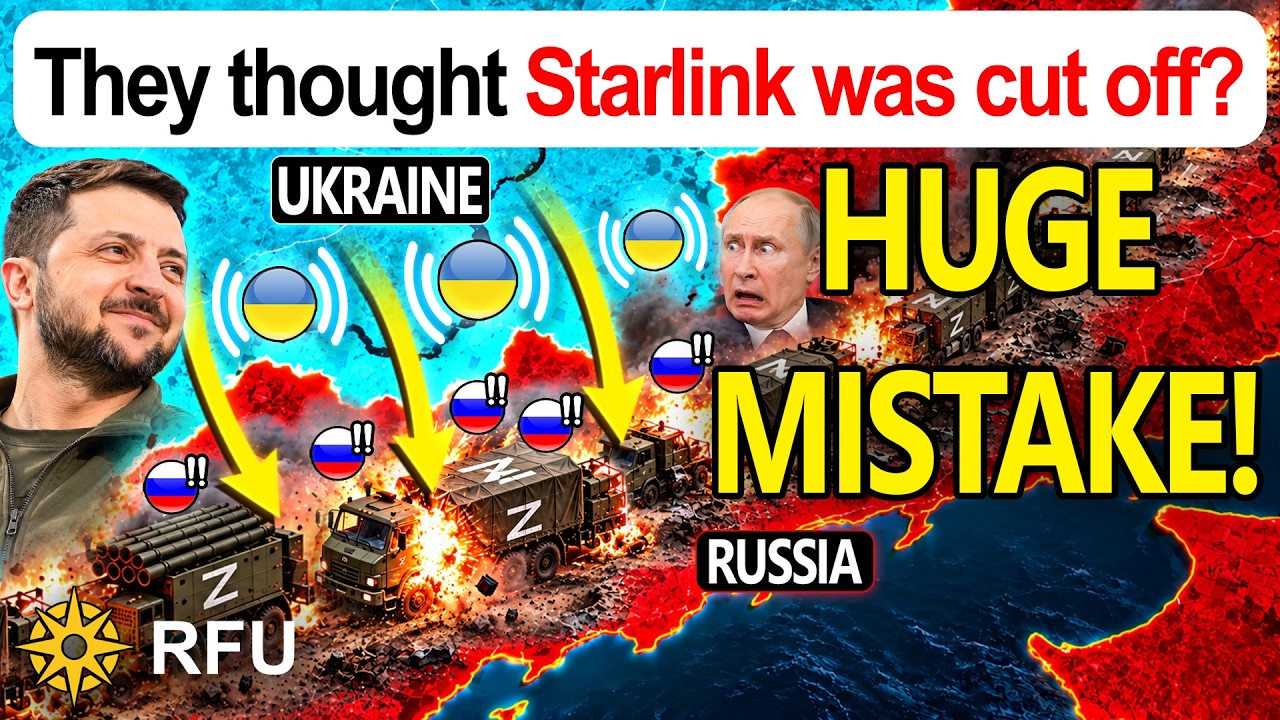
Here, new footage shows a devastating Ukrainian ambush against a Russian convoy containing more than twenty vehicles, including supply trucks, fuel tankers, and armed escorts, with the Russians traveling in a large concentration, suggesting they felt safe from Ukrainian mid-range drone strikes due to Starlink speed limitations. Several escort vehicles carried mounted machine guns, apparently intended to protect the convoy against incoming drones, but these improvised mobile air defenses proved ineffective. Ukrainian drones struck the convoy, targeting the leading vehicle, and then continuing one by one, leaving numerous of them burning along the road.
Remarkably, Russian footage filmed from one of the escort vehicles subsequently revealed the destruction, showing burning trucks and Russian soldiers standing helplessly beside the wreckage, demonstrating how completely the convoy’s protection had failed, with the concentration magnifying the losses. Instead of losing individual vehicles during separate journeys, Russian forces suffered substantial destruction in a single engagement.
However, Ukrainian attacks are not limited to roads, as the Azov Corps announced that its drone operators had struck more than one hundred railway vehicles supporting Russian logistics across the Donetsk Region. The attacks targeted locomotives, fuel tankers, and other railway equipment, including assets moving supplies between Russia and Russian-controlled Ukrainian territories, with the consequences being enormous.
A single railway wagon can transport approximately sixty tons of cargo, potentially equivalent to thousands of artillery shells, depending on their caliber and packaging. Similarly, a railway fuel tanker can carry roughly sixty tons of fuel, enough to support substantial military vehicle movements. Destroying locomotives and disabling railway infrastructure also interrupts entire supply movements, multiplying the effects beyond the equipment directly hit, making railway transport particularly damaging for Russian forces, which depend heavily on it to sustain their offensive operations.
The timing of these attacks is equally important, as Starshield access for Ukrainian forces has been restored and the previously imposed Starlink speed restrictions lifted. Those restrictions had complicated certain Ukrainian drone operations, temporarily reducing the effectiveness of some mid-range strikes, and Russian commanders attempted to exploit that opportunity by moving larger vehicle concentrations toward the frontline. The newly released footage illustrates why restoring Ukraine’s interception and strike capabilities matters, because when Ukrainian drones cannot effectively threaten moving supply columns, Russian forces gain greater freedom, but once those capabilities return, large concentrations become especially vulnerable.
At the same time, Ukraine has also attacked Russian logistics depots, and in Russian-controlled Donetsk, Ukrainian drones struck a major vehicle parking area, with aftermath footage showing extensive destruction across it, with more than thirty vehicles destroyed and nearly thirty others damaged. Losing approximately sixty trucks in one location represents a significant logistical setback, as these vehicles are needed to transport ammunition, fuel, food, engineering equipment and replacement troops between Russian rear-area depots and frontline positions. A similar attack was reported in Russian-controlled Luhansk, where eyewitness footage showed multiple explosions during a drone raid against another truck depot.
Overall, these attacks demonstrate a coordinated effort to disrupt Russian logistics at several levels, with railway strikes threatening long-distance supply movements, depot attacks destroying vehicles before deployment, and drone ambushes intercepting convoys attempting to reach the frontline. The cumulative pressure complicates Russia’s ability to sustain offensive operations across Donbas, but most importantly, Russia’s apparent attempt to exploit the temporary Starlink restrictions has backfired. Before the disruption, Russian logistics frequently relied on smaller, dispersed movements to reduce exposure to Ukrainian drones. Believing the danger had diminished, Russian troops apparently resumed moving larger concentrations, but with Ukrainian capabilities restored, Russia faces renewed pressure on its supply network, while Ukrainian defenders gain another opportunity to weaken Russian offensive potential before reinforcements even reach the battlefield.

🔴 YOU ARE MISSING HALF OF OUR VIDEOS! Subscribe to unlock all our reports and support our work: https://www.youtube.com/channe....l/UCcNB1tZYpeDetqCad
Today, there are important updates from the Russian Federation.
Here, Ukraine is taking the fight directly to Russia’s missile industry, launching a sweeping campaign against the factories supplying Moscow’s attacks on Ukrainian cities. With Russian missile production accelerating and Ukrainian air defenses struggling with shortages of interceptors, the Ukrainian command is increasingly embracing the principle that the best defense is not allowing Russian weapons to be produced and launched.
One of the latest strikes demonstrates the campaign’s extraordinary geographical reach, as Ukrainian drones struck the Omsky Kauchuk petrochemical plant in Siberia, approximately two-thousand-and-five-hundred kilometers from Ukraine. Footage showed a major fire at the facility, which produces synthetic rubber, fuel additives, and industrial chemicals, a key component of supply chains supporting solid rocket propellants used in Russian missile systems.
Another attack targeted the Tolyattikauchuk plant in the Samara Region, with drones causing damage to chemical-processing equipment, including production units, forcing the facility to stop production. It manufactures synthetic rubber, polymers, and chemicals with applications across Russia’s military-industrial sector, especially in the missile-building program.
Together with the successful strikes in recent days against other key facilities in Voronezh, Lipetsk and Oryol, these Ukrainian actions threaten the chemical supply chains supporting Russian weapons manufacturing. Their significance becomes clearer against the backdrop of Moscow’s intensified missile and drone attacks, designed to overwhelm Ukraine’s limited air-defense ammunition.
However, these are only the latest strikes, as Ukraine is increasingly attacking the enemy's production infrastructure. In the Perm Region, Ukrainian drones struck the Azot chemical complex, which manufactures ammonia, nitric acid, ammonium nitrate, and other industrial chemicals needed for missile production, as smoke and production disruption were reported following the attack.
In the Rostov Region, a major fire engulfed approximately nine thousand square meters of warehouses at the Aksaykardandetal facility, which possesses metalworking and manufacturing capabilities relevant to Russian military production.
Meanwhile, Ukraine attacked the Redkinsky Experimental Plant in the Tver Region, which produced specialized chemical components associated with Decilin-M aviation fuel used by Russian cruise missiles. As a result, disrupting specialized fuel production complicates Russia’s ability to sustain its long-range missile operations against Ukraine.
Another strike targeted the Sasta machine-tool factory in Sasovo, in the Ryazan Region, responsible for manufacturing computer-controlled machine tools used across Russia’s aerospace, defense, and heavy industries, affecting the production of precision components required by multiple weapons programs.
Near Moscow, explosions were reported at the Krasnozavodsk Chemical Plant, an enterprise associated with explosives, pyrotechnics, and specialized ammunition production, like the thermobaric warheads used in Russian Geran attack drones.
Ukraine’s Security Service reported striking the Azov Optical-Mechanical Plant in the Rostov Region with Neptune cruise missiles and drones, with footage confirming damage to optical production, assembly facilities, electronics workshops, and other manufacturing areas responsible for the preparation of missile seekers, thermal-imaging equipment, and other key electronic components. Ukraine has also repeatedly targeted Voronezhsintezkauchuk, a major synthetic-rubber producer whose products support aviation, vehicles, and other industrial sectors.
Overall, the cumulative effect of the Ukrainian campaign matters more than any individual strike, as Russia’s missile industry depends on interconnected suppliers producing chemicals, electronics, batteries, specialized machinery, and guidance systems. Disrupting several links simultaneously creates production bottlenecks that are harder to overcome than damage to a single assembly plant. With Russian attacks intensifying and interceptor missiles remaining scarce, Ukraine is attempting to reduce the threat at its source with a clear strategy. Instead of waiting for Russian missiles to reach Ukrainian skies, Ukraine is bringing the war to the factories that make them, proving that offense is the best defense.
🔴 YOU ARE MISSING HALF OF OUR VIDEOS! Subscribe to unlock all our reports and support our work: https://www.youtube.com/channe....l/UCcNB1tZYpeDetqCad
Today, there is dangerous news from the Russian Federation.
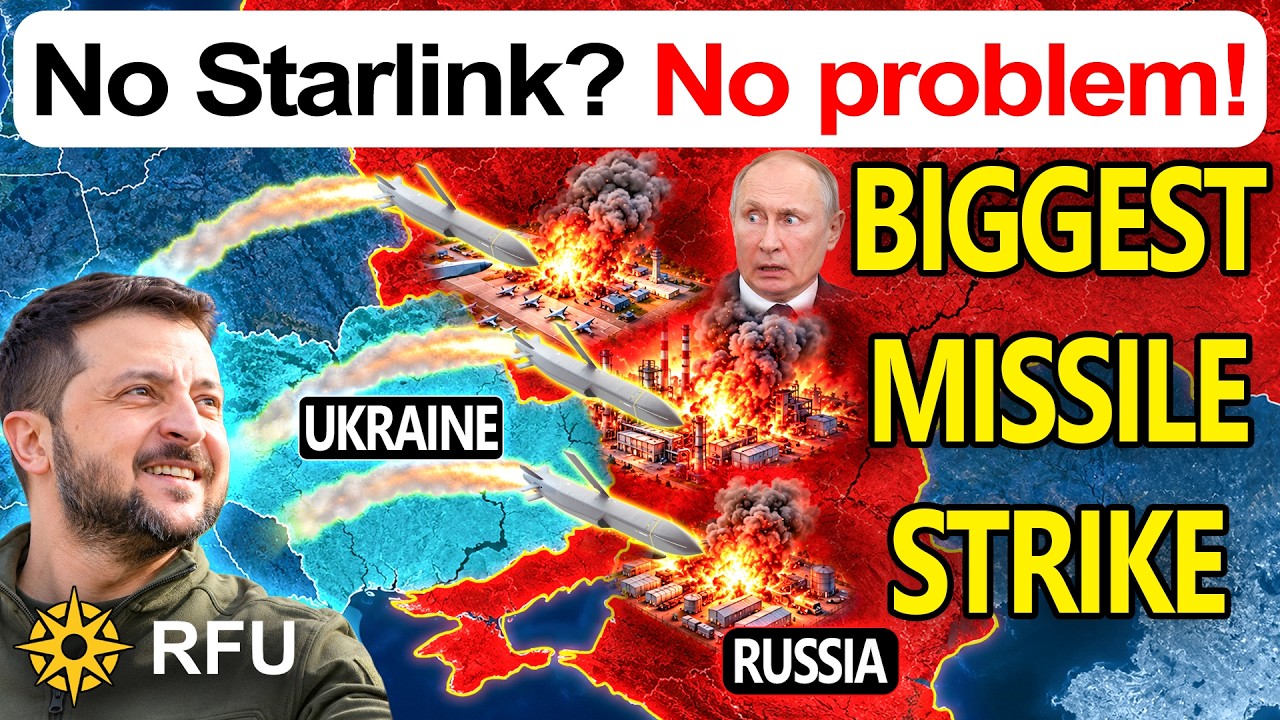
Here, Ukraine has launched a devastating wave of Storm Shadow strikes against Russia’s military-industrial infrastructure, targeting factories responsible for producing essential components for missiles, aircraft, and military vehicles.
The latest attack struck Voronezh, where Ukrainian missiles and drones targeted two major industrial facilities: the Voronezh aircraft factory and the local petrochemical plant. Russian Governor Alexander Gusev claimed that air defenses intercepted more than one hundred drones across the region, including more than seventy over Voronezh itself. However, eyewitness footage showed smoke rising near the petrochemical facility, while fires and damage were reported over the other factory. Ukraine’s drone and missile manufacturer Fire Point confirmed the attack against both targets, although the full extent of industrial damage remains to be determined.
The petrochemical facility produces almost four-hundred-thousand tons of synthetic rubber and related products annually. These materials have military applications, including aircraft tires, heavy-vehicle components, armored-vehicle seals, and specialized products used in missile manufacturing. The nearby aviation plant belongs to Russia’s Ilyushin production structure, making it another significant military-industrial target, and disrupting such facilities threatens the supply chains supporting Russian weapons production, even when the factories themselves do not assemble finished missiles.
This attack coincides with the renewed British support for Ukraine’s long-range strike capabilities following disruptions affecting Starlink and Starshield services, which complicated Ukrainian military operations and prompted London to replenish Ukraine’s Storm Shadow cruise missile stockpile. The agreement followed discussions between President Zelensky and British Prime Minister Andy Burnham, while the number of missiles and their delivery schedule remain undisclosed for security reasons. Storm Shadow is a British-French air-launched cruise missile designed to destroy heavily protected stationary targets, as its four-hundred-and-fifty-kilogram warhead allows Ukrainian aircraft to attack important military infrastructure far behind Russian lines.
Meanwhile, Ukraine has demonstrated exactly why additional long-range weapons like the Storm Shadow matter, as the Ukrainian forces struck the important Energia plant in Yelets, Lipetsk Oblast, which manufactures specialized batteries and power supplies used in Russian Iskander-M ballistic missiles, guided aerial bombs, and other military equipment. Analysts identify Energia as the sole producer of certain batteries used in guidance and correction modules for Russian aerial bombs, and footage following the Storm Shadow strike with four missiles showed extensive damage to a production building, including fire damage across multiple floors. Ukraine’s General Staff confirmed that a workshop producing power sources was hit, dealing critical damage to Russian war efforts, because sophisticated weapons depend on specialized components that cannot be replaced immediately. Destroying battery production capacity disrupts several Russian weapons programs simultaneously, delaying production even if missile assembly facilities remain operational.
Another major strike targeted the Proton electronics plant in Oryol, as Ukraine’s General Staff confirmed the attack, following footage of multiple Storm Shadow missile impacts within several seconds and large explosions was published by Russian social media channels. Proton manufactures semiconductor devices and specialized electronic components reportedly used in Iskander-M missiles, S-Seventy-One Kover cruise missiles, and Pantsir air-defense systems. Subsequent footage showed extensive destruction, including collapsed roofing and damaged production areas, as the factory became unusable, again creating bottlenecks extending across multiple Russian weapons programs.
Overall, Ukraine is increasingly targeting the industrial infrastructure enabling Russia’s continuing attacks, rather than merely intercepting weapons after launch. Despite Starlink-related difficulties, European support is helping Ukraine maintain long-range strike pressure, with the timing of British Storm Shadow missile deliveries matching the intense strikes on Russian military production in the last days. The strategic message is clear, as Russia’s factories are becoming increasingly vulnerable, and Ukraine intends to disrupt the production of weapons used against its cities before those weapons reach the battlefield, to compensate for the disruption of Starlink and the continuing lack of interceptor missiles for Patriot and other air defense systems.
🔴 YOU ARE MISSING HALF OF OUR VIDEOS! Subscribe to unlock all our reports and support our work: https://www.youtube.com/channe....l/UCcNB1tZYpeDetqCad
Today, the biggest news comes from Russia.
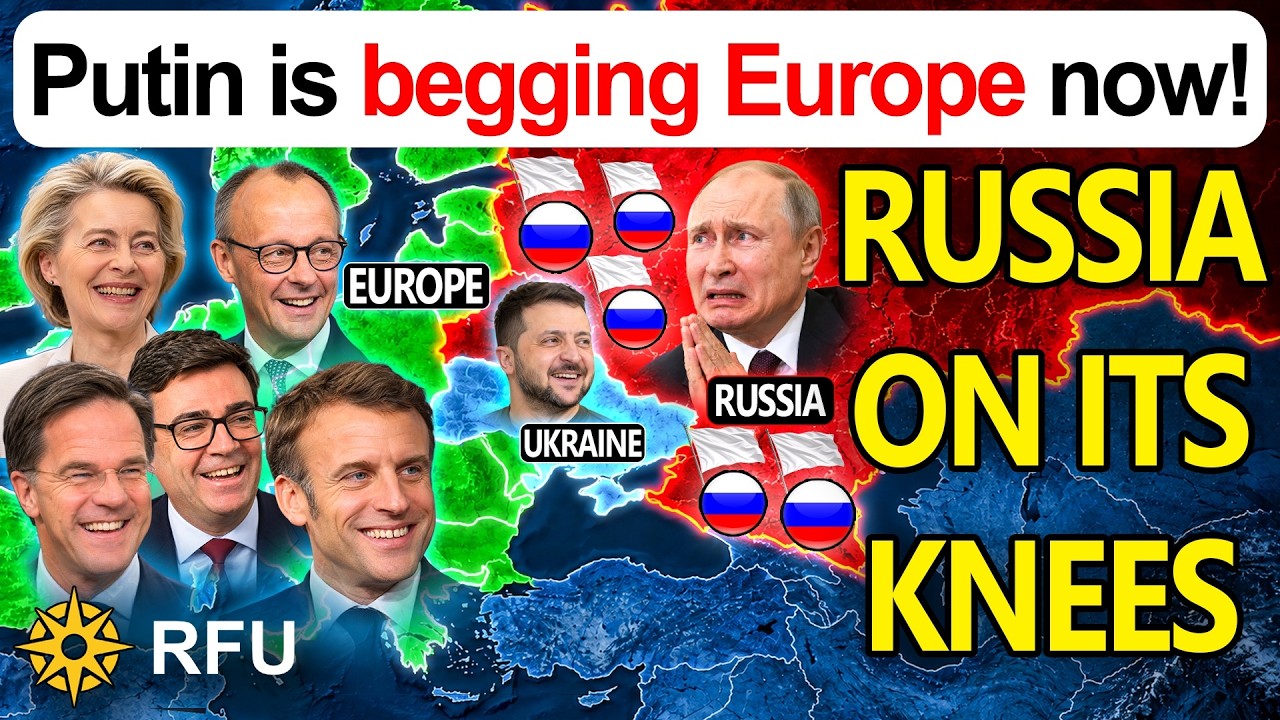
Recently in a groundbreaking turn of events, the Kremlin’s foreign policy adviser Yuri Ushakov stated that Europe should be included in the talks between Russian, Ukrainian, and American officials, because it will play a decisive role in reaching an agreement to end the war. The statement came as a surprise, given that previously, Russia had tried in every way possible to exclude Europe from such participation. Before this, Russia aimed to reach an agreement with the US without Ukraine or Europe and show that the end of the war can only be decided by superpowers, while no one else is allowed to have a say in it. This change in tone comes after Russia showed willingness to resume trilateral negotiations with US and Ukrainian representatives.
Despite Russia’s initial reluctance to include Europe in the negotiations, it has become clear to them that they need Europe at the negotiating table if they want to end the war. Notably, Europe has become immensely important in supporting Ukraine militarily and financially since the US halted all donated aid after the last presidential election. As such, Russia is coming to understand that talks with only the US are pointless if Europe continues to back Ukraine.
The main reason for this is that Europe has now developed the ability to keep supporting Ukraine and allow it to continue defending itself regardless of the US’ stance. Notably, Europe is providing ninety billion euros worth of financial aid to keep the Ukrainian state running this year and in two thousand and twenty-seven. European countries are also currently providing two-thirds of the total intelligence Ukraine receives from its international partners. This includes extensive satellite imagery, intercepted communications, and real-time tracking of Russian troop movements, while space-based early detection capabilities for ballistic missile launches and military internet connectivity are the only things lacking. To reduce Ukraine’s dependence on Patriot interceptor deliveries, Ukraine is jointly developing the Freya air-defense system with European defense firms. This system will be produced in Ukraine and Europe, providing Ukraine with anti-ballistic protection. European firms are also producing millions of artillery shells and small-arms ammunition, which are then supplied to Ukraine. More importantly, some European countries are manufacturing Ukrainian interceptor, FPV, and long-range strike drones, which allow them to provide Ukraine with more weapons than they could produce domestically and outside of direct Russian strike range. The Purl initiative also gives Ukraine billions of dollars to purchase air defense and other weapons from various defense companies they desperately need.
European countries would also play a key role in post-war security guarantees, which would include up to tens of thousands of troops, who would act as a peacekeeping force and a credible deterrent against Russia. Additionally, it is estimated that the war caused six hundred billion dollars’ worth of damage in Ukraine, which means that even if the war ends, Ukraine would need enormous investment for reconstruction, the majority of which would also likely be provided by Europe as part of continued EU integration initiatives. Given that Europe now plays the most important role in military and financial support for Ukraine, Russia has no choice but to invite them to the negotiations.
The reasoning for Russia to want Europe to join in the negotiation process could also be that it is seeking larger concessions than just from Ukraine. Geopolitical analysts note that Russia could want to pressure Nato into reducing its military footprint on the alliance’s eastern flank. They state that for years Putin has wanted Nato to reduce its military presence in Europe to its level before former Eastern Bloc countries joined the Alliance. Russia made the same demands in two thousand and twenty-one, shortly before launching its full-scale invasion of Ukraine in a play to frame it as a cause of the war, which Nato firmly rejected then, and it is highly unlikely to accept this now.
Overall, Russia’s decision to involve Europe reflects that ending the war requires more than an agreement between Washington and Moscow. Any deal must account for the countries financing Ukraine’s defense, supplying its weapons, and shaping its future security. Moscow may hope to use negotiations to weaken European unity, but Europe’s continued support gives it leverage and shows Russia that it cannot exclude Ukraine or Europe from the negotiations if they really intend to end the war.

🔴 YOU ARE MISSING HALF OF OUR VIDEOS! Subscribe to unlock all our reports and support our work: https://www.youtube.com/channe....l/UCcNB1tZYpeDetqCad
Today, the biggest news comes from the Russian Federation.
Here, twelve thousand North Korean workers are being sent directly into one of the most important parts of Russia’s wartime drone industry. A joint CSIS and George W. Bush Institute report says twelve thousand North Korean workers have been sent to the Alabuga special economic zone, where Russia assembles Shahed type attack drones used in mass strikes against Ukraine. The workers receive around two dollars and fifty cents per hour, while the North Korean government takes between seventy and ninety percent of their wages. Russian youth and other foreign workers are also employed at Alabuga, which is already producing more than five thousand five hundred drones per month. For Moscow, this gives the Shahed program another large source of tightly controlled manpower, while Pyongyang gains another way to profit from sending its workers to Russia.
This deployment follows Kim Jong Un’s pledge to expand and deepen cooperation with Russia, while promising what he called invariable support for Vladimir Putin and the Russian people. Kim said Pyongyang intended to widen cooperation under the countries’ alliance relationship and openly backed Russia’s war, describing it as a sacred struggle that Moscow would ultimately win. Inside Russia, however, North Korea’s expanding role in supporting the Russian war effort is already creating unease. One Russian journalist directly asked Foreign Minister Sergey Lavrov how Russia had reached the point where its closest remaining partners were North Korea and Iran. Lavrov answered by asking what was wrong with such company, exposing the contradiction between the Kremlin’s image of Russia as a modern state and its increasing reliance on heavily sanctioned states such as North Korea and Iran.
North Korean support is also spreading beyond military production, as North Korea is sending organized female labor brigades into the Russian economy through outsourcing companies. These workers are being placed on assembly lines, in sewing factories, kitchens, and farms, with advertised wages starting at around just four hundred eighty rubles, or roughly six dollars, per hour. For Moscow, this provides another disciplined workforce at a time when the war is placing pressure on available manpower, while Pyongyang gains another channel for extracting income from citizens sent abroad. With North Korean workers entering more sectors of the Russian economy, both governments are also building the infrastructure needed to move far larger numbers of people and goods across their shared border.
The expansion of North Korean labor inside Russia is being matched by a new transport route capable of moving far more people and cargo across the border. Russia and North Korea have opened their first road crossing across the Tumen River, adding a separate route for trucks, buses, and passenger vehicles alongside the older railway only Friendship Bridge. The new crossing is around one kilometer long, while the nearby Khasan checkpoint is designed to process up to three hundred vehicles and two thousand eight hundred fifty people per day, with plans allowing that capacity to expand further. Russian officials promote the bridge as a project for tourism and trade, but it strengthens a relationship in which North Korea already supplies Russia with artillery shells, missiles and troops. The crossing can also move more workers into Russia and carry industrial or military cargo in both directions. By expanding the border from a single railway connection into a road and rail network, Moscow and Pyongyang are creating the transport capacity needed to sustain a much deeper economic and military relationship.
Overall, Russia’s growing reliance on North Korea is creating a support system that can keep expanding even as Western sanctions and diplomatic isolation narrow Moscow’s alternatives. The deeper this system becomes, the more Pyongyang gains leverage over Russian weapons production, labor supply, and access to additional manpower during a prolonged war. Permanent road and rail links also give both governments more ways to distribute trade and military related traffic across smaller movements that become harder to track and disrupt. With North Korean workers entering Russian factories and new transport capacity connecting the two countries, Moscow is allowing Pyongyang to become part of the industrial machinery sustaining the war rather than remaining an outside supplier of weapons and ammunition.

🔴 YOU ARE MISSING HALF OF OUR VIDEOS! Subscribe to unlock all our reports and support our work: https://www.youtube.com/channe....l/UCcNB1tZYpeDetqCad
Today, there is important news from the Black Sea.
Here, Ukrainian Navy footage shows an extraordinary development, as unmanned Ukrainian naval vessels are used to destroy Russian attack drones before they can even reach the coastline, which is effectively transforming the Black Sea into an offshore air-defense zone, threatening one of Russia’s most important routes for launching Shahed attacks against southern Ukraine.
In the first engagement, a Ukrainian Sargan-Three-Thousand sea drone launches a Sting drone directly from the open sea. The interceptor then approaches an incoming Russian Shahed and destroys it in flight successfully. Additional footage demonstrates another Sargan equipped with a remotely controlled gun turret. Once another Shahed enters its range, the turret shoots it down with it automatic fire.
Together, these engagements demonstrate that Ukrainian naval drones are becoming mobile air-defense platforms, exploiting the multipurpose Sargan Three-Thousand, which is capable of carrying up to four-hundred-and-fifty kilograms of payload and operating as far as one-thousand-and-six-hundred kilometers from its base. Its greatest advantage is mobility, because rather than waiting for Russian drones to approach coastal defenses, Ukrainian operators can position interceptor platforms offshore, extending the defensive perimeter far beyond the coastline.
The drone can be armed with low-cost interceptors like Sting, which reach speeds of approximately two-hundred-and-eighty kilometers per hour, with an operational range of around thirty-seven kilometers, and carry an explosive warhead designed to destroy aerial targets through direct impact or detonation.
The alternative Sargan configuration uses a remotely controlled turret armed with a twelve-point-seven millimeter machine gun and electro-optical targeting equipment that provides another defensive option against low-flying drones, especially when targets enter effective gun range.
The implications are considerable, because previously, Russia could exploit the Black Sea as a relatively safe approach toward southern Ukraine. Shaheds flying across the water could avoid many Ukrainian frontline defenses before approaching ports, coastal cities, and critical infrastructure. Consequently, Ukrainian air-defense crews often had limited time to intercept incoming weapons before they reached populated areas, but by moving interceptors offshore, Ukraine fundamentally changes that calculation. Russian drones can now be engaged much earlier, creating additional opportunities to destroy them before they threaten their intended targets, while even an unsuccessful first interception also leaves more time for another defensive system to engage the same drone.
However, the larger consequences extend beyond the Black Sea, as Ukrainian frontline formations already operate interceptor drones against Russian reconnaissance aircraft, loitering munitions, and larger strike drones passing through their operating areas. That makes Russia’s alternative routes across the heavily defended frontline increasingly dangerous. Ukrainian interceptor teams are already monitoring these sectors, creating additional opportunities to detect and destroy Russian long-range drones. At the same time, the Black Sea previously offered Russia an opportunity to bypass some of those concentrated defenses, but now Ukraine is beginning to challenge that advantage.
Instead of choosing between heavily defended frontline corridors and relatively open maritime approaches, Russian commanders increasingly face interception threats along both routes, which forces flight path changes, longer journeys, or drone exposure to additional Ukrainian defensive positions.
Overall, by intercepting Shaheds offshore, Ukraine can reduce the pressure on coastal defenses and improve protection for infrastructure supporting maritime trade, as the economic implications are equally important, as the Black Sea ports remain essential for exporting goods and generating revenue that supports the national economy during wartime. Russia’s launch infrastructure in Crimea makes the maritime approach particularly important, but Ukrainian naval drones are now extending the defensive perimeter into the same waters. As a result, the Black Sea is becoming another increasingly dangerous interception zone where Ukrainian unmanned systems can destroy Russian weapons before they ever reach land.
🔴 YOU ARE MISSING HALF OF OUR VIDEOS! Subscribe to unlock all our reports and support our work: https://www.youtube.com/channe....l/UCcNB1tZYpeDetqCad
Today, the biggest news is coming from the Dnipropetrovsk direction.
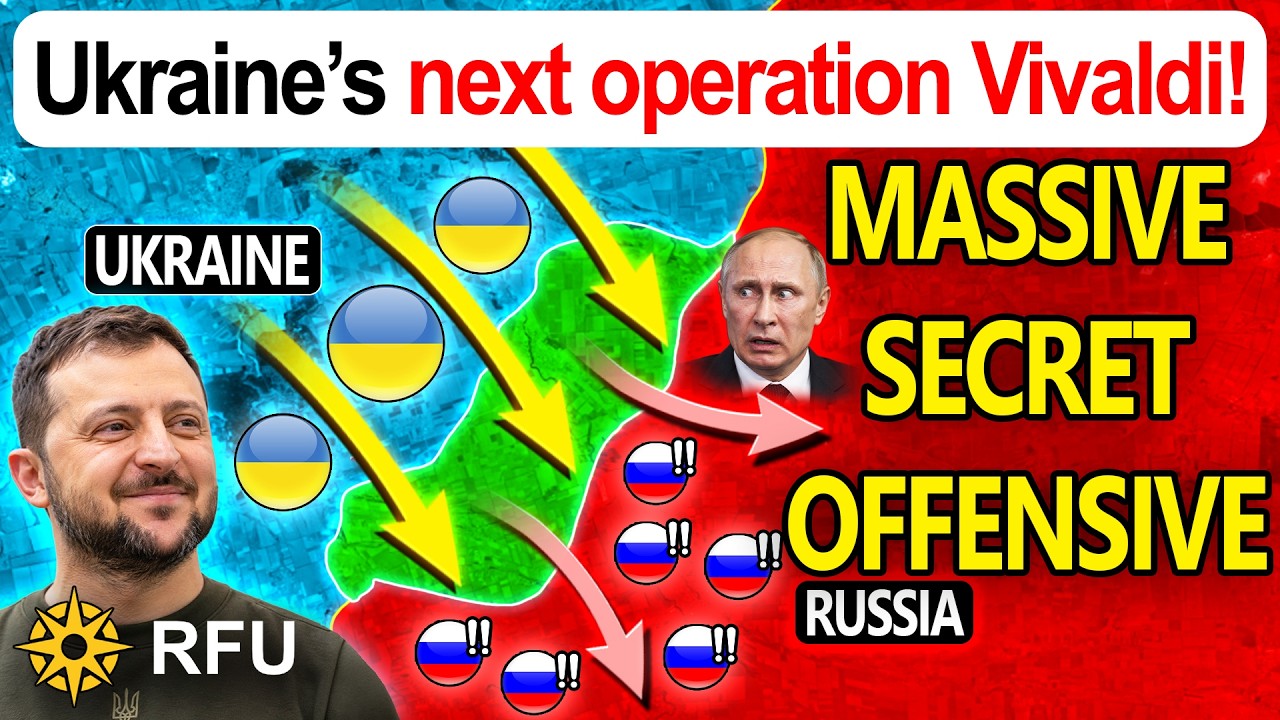
Here, the secret Ukrainian counteroffensive has been underway and making rapid gains in the southeast. With Russians desperately trying to keep Ukrainian successes quiet, a complete informational blackout is in place from both sides, with only the slightest hints at the true scale of the situation on the frontline.
Most notably, three significant Ukrainian advances have been confirmed in this sector. The first, Ukrainians have fully cleared the grey zone after Russians reinfiltrated following past Ukrainian successes here. Second, Ukrainians have fully liberated the town and the approaches of Shevchenko, securing Ukrainian gains made earlier this year in the now-rear. Lastly and most significantly, Ukrainians have pushed back Russian lines in the center, and made a breakthrough into the Russian staging ground of Komar itself. Crossing the Mokri Yaly River, Ukrainians now have a foothold across it within a built up settlement. Komar is the largest town along this river, and in turn has served as an important Russian staging ground for their past offensives toward the Vovcha River earlier this year. The other towns are too small and have too little intact for Russians to stage any meaningful forces and logistics there. Ukrainians managing to break into this town has therefore cut a major advantage out from under the Russian force grouping in the area.
What this now means is that supplies and reinforcements have to be stored and transported all the way from Velika Novosilka to the Russian frontline. This trip spans seventeen kilometers or ten miles along a route well within Ukrainian drones’ operating range. Ukrainians in turn experience much easier logistics here. The Ukrainian river crossings to the west are surrounded by forests that provide cover, both for storage and transport across the water. Additionally, while Russians trying to avoid the main roads are forced through open fields, the fields on the Ukrainian side are covered with tree farms. This means much more hardened roads able to bare the weight of heavy equipment, along with a huge amount of concealment to store supplies and soldiers extremely close to the frontline.
Looking back at the situation on the ground, there is no clear information on the state of the ongoing battles for Komar. However, Russian high command has recently found it necessary to release footage of several flag planting videos within the southern part of the town alone. As Russian commanders mainly rely on these flag planting videos as damage control in the media space, it is good to say that the situation for Russian forces in Komar is less than ideal. In turn, Ukrainians have released footage showing a massive series of airstrikes hitting Russian force concentrations and logistics depots in the town of Velyka Novosilka. As these GBU thirty-nine glide bombs are GPS guided, and all six of them seem to have it large intact buildings directly, it is highly likely that Ukrainians are conducting full air strike barrages on Russian strongpoints in the town.
Overall, Ukrainians have made a significantly important step in the process of pushing Russians back in the southeastern sector at Komar. Crossing the River into the town itself puts Russian logistics under immense pressure through deep Ukrainian fire control and extremely disadvantageous terrain. These disadvantages are becoming worse as autumn rains arrive on the front, further restricting Russian maneuverability. If Ukrainians manage to keep up their pressure, Russians lines will continue to be pushed further back, and reduces any Russian hope of regaining a presence in the Dnipropetrovsk region to zero.

🔴 YOU ARE MISSING HALF OF OUR VIDEOS! Subscribe to unlock all our reports and support our work: https://www.youtube.com/channe....l/UCcNB1tZYpeDetqCad
Today, the biggest news comes from the Novopavlivka direction.
Here, the Russians attempted to put a decisive end to Ukraine’s advance and take back the initiative. However, the Ukrainian marines were anticipating this and conducted a highly coordinated response, which caught the Russians fully off guard.
Ukrainians are currently launching a massive counterattack south toward Komar and Velyka Novosilka, after their wider counterattack in the Dnipropetrovsk region. As a result of this attack, Ukrainian forces are now only seven kilometers away from Velyka Novosilka, threatening to cut it off from supplies. To stop the advancing Ukrainian forces, the Russians attempted to outflank them and launched a breakthrough attack toward Filiia.
However, Ukraine's fortieth Marine Brigade conducted a coordinated counterattack, nicknamed Audit, to clear the Russians out before they could consolidate. The operation started with preparatory strikes targeting known Russian positions. First, artillery, FPV drones, and heavy bombers struck the Russian hideouts to reduce their manpower before the clearing started. Then, the marines moved in small infantry groups, using ghillie suits to covertly advance through the thick vegetation, without being spotted by Russian drones. As contact was made with the first Russian dugout, the Ukrainian unit’s machine gunner quickly suppressed it with fire, while the other marines closed in on the Russians, wounding one Russian and forcing him to surrender. The captured Russian was quickly interrogated to get information about neighboring units and their whereabouts. Acting quickly on fresh intelligence, the Ukrainian’s advanced deeper and found a small shed, where they eliminated at least two Russians and captured their equipment. Another two Russians, who were hiding nearby in the forest, were also found and engaged. As a result, one of them was eliminated with a grenade, while the other decided to lay down his arms and surrender, rather than face certain death. As the night approached and visibility dropped, the Ukrainians continued the operation with FPV drones equipped with thermal cameras and struck the sleeping Russians. During the day, heavy bomber drones and FPV drones continued to strike the Russians to cover the advancing marines on the ground, proving high coordination between units. During the operation, logistics units made approximately thirty deliveries by air, bringing supplies attached to drones with ropes. Additionally, unmanned ground vehicles twice carried three hundred kilograms of ammunition and heavier supplies, which couldn’t be brought in by aerial drones. During the counterattack, the Ukrainian marines eliminated at least a dozen Russian soldiers, captured three prisoners of war, and cleared five square kilometers, stopping Russian advances and infiltration towards Filiia.
As a result of this successful counterattack, the Ukrainians cut the Russian outflanking effort by attacking it in the rear and clearing them out of the forest. Now the larger Ukrainian offensive to the south is secure and primed to continue further towards Komar and Velyka Novosilka without fearing an attack from behind. As Russia’s foothold is now dismantled, they will be forced to use the same narrow forest line again to infiltrate or the mined open fields to try to push towards Filiia, which is held firmly by the Ukrainian marines.
Overall, this operation shows that Ukraine’s counterattacks are not just about reclaiming territory, but also about dismantling the Russian positions that could threaten future advances. By striking the flanking force before it could establish a foothold, the marines prevented Russia from turning Ukrainian momentum into a vulnerable, overstretched push. Just as importantly, the operation demonstrated how coordination between infantry, drones, artillery, and ground logistics can allow a smaller force to defeat an enemy without relying on large armored formations. If Ukraine can maintain this pressure, Russian forces may struggle to protect their own positions while simultaneously preparing attacks to stop the Ukrainian advance toward Velyka Novosilka.
🔴 YOU ARE MISSING HALF OF OUR VIDEOS! Subscribe to unlock all our reports and support our work: https://www.youtube.com/channe....l/UCcNB1tZYpeDetqCad
Today, the biggest news is coming from Donetsk City.
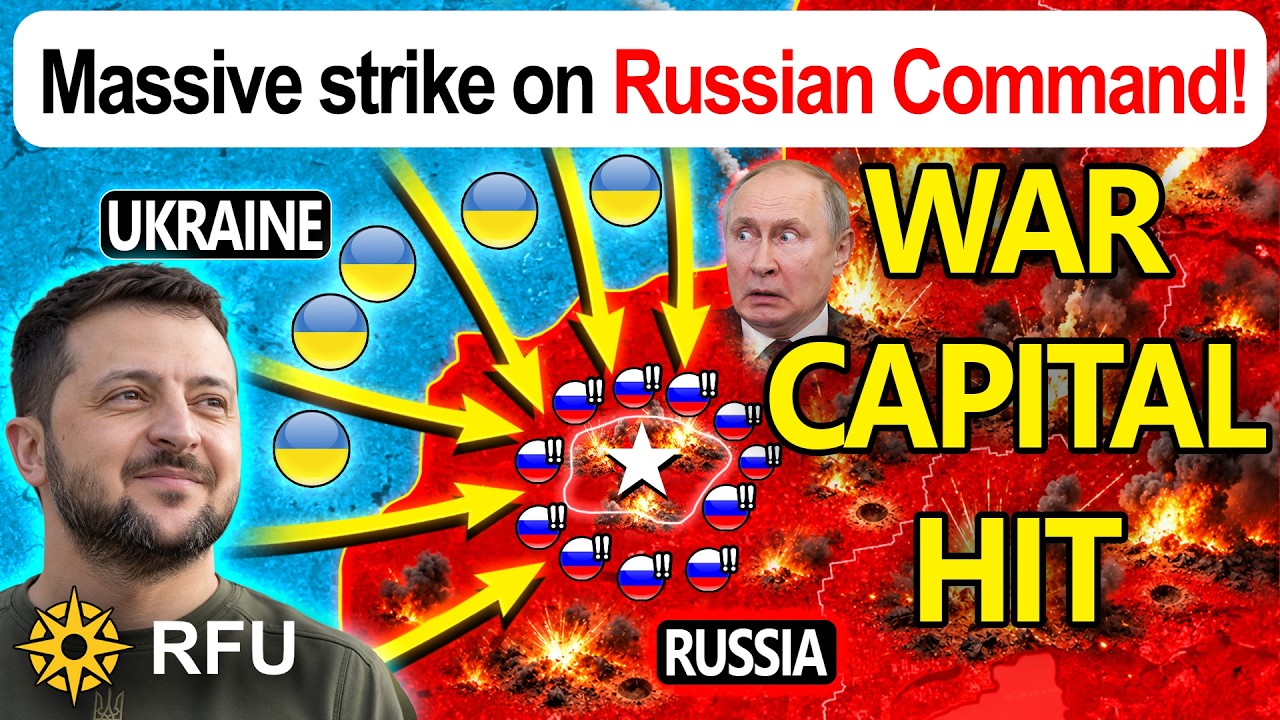
Here, Ukrainians unleashed a deadly barrage on the capital of the Russian war effort in Donbas. Blowing up depots, communication centers, and force concentrations, Russian command and control has been severely weakened in the sector.
First, residents of the city began sharing footage of Ukrainian drones flying overhead in the dead of night. Quickly however, these drones came down on Russian positions as the scale of the strike became clear. Bright flashes of electricity show that Ukrainians destroyed Russian transformers and substations across the city. Footage of the strikes themselves is limited; however civilians quickly filmed the extensive aftermath throughout the day, showing severe damage to one building in particular. Geolocations of the site confirm that the target was the head office and center of operations for the main Telecommunications provider of all of Russian-controlled Donbas. Aftermath footage from Luhansk shows that their secondary center in the city was hit and destroyed as well.
These two major data centers provide communications to Russia’s entire armed forces within the Russian-controlled territories. As Russian satellite communications continue to fall behind schedule, any Russian forces who are not part of High Command have to keep relying on civilian means of communication to coordinate their operations instead. While Ukrainian strikes on the telecommunications hubs in Donetsk and Luhansk therefore do not cut communication between high-ranking Russian commanders, it does cut the commanders’ communications with their officers and soldiers on the ground.
However, the destruction does not stop there, as Ukrainian high Command confirmed they conducted several more strikes on Russian command posts around the city. As no Russian commanders have been announced dead yet, we can assume that the top level of Russian officers survived the strikes. But as the number of strikes was intensive, they must understand that they are well within Ukraine’s crosshairs, and that they will be killed one way or another.
Lastly, Ukrainians have been intensely targeting Russian launch points and storages for Shahed drones in and around Donetsk city. Geolocated footage shows Ukrainian FPV drones hunting down the pickup trucks used by Russians to launch their dreaded weapons. Ukrainians are continuously sharing footage proving that their strike drones are penetrating Donetsk City’s defenses at scale. The result is a massive hunt on Russian troop concentrations, railways, supply depots, and assets crucial for Russian command and control, showing that nowhere is truly safe for Russians.
Overall, Ukrainians dealt Russians a massive blow by destroying the main data centers within the Russian-controlled territories of Ukraine, used by enemy forces to coordinate their next moves. Striking major command sites, energy grids, and supply depots only further degrades Russian forces’ ability to operate from the area. Hunting down Russian soldiers and logistics moving through the Russian war capital only further increases the damage, as Donetsk City is coming under a relentless and comprehensive Ukrainian barrage.

🔴 YOU ARE MISSING HALF OF OUR VIDEOS! Subscribe to unlock all our reports and support our work: https://www.youtube.com/channe....l/UCcNB1tZYpeDetqCad
Today, the biggest news comes from Africa.
Russia is widening military recruitment across Africa, including hundreds of men from Madagascar for the first time since the full-scale invasion of Ukraine started. A Ukrainian intelligence source said that Moscow recruited six hundred and ninety-nine men from Burundi and five hundred and thirty from Zimbabwe in the first nine months of two thousand and twenty-six. To further increase their manpower, recruitment also expanded in Sierra Leone and other African states.
Russia increasingly needs foreign recruits because it cannot meet the army’s domestic demands. Notably, Russia has lost approximately three hundred and thirty thousand soldiers this year, while recruitment has been falling behind, meaning that the size of the Russian army has been decreasing by six thousand soldiers monthly. As a result, Russia is forced to try other options to fill its ranks. Russia has so far avoided another large-scale mobilization since two thousand and twenty-two, fearing a backlash from its citizens, which is why it resorted to foreign recruits.
Russia already maintains political, economic, and military ties on the continent, including through the Africa Corps, the state-run Russian paramilitary running Russian operations in Africa, which facilitates networks and access for the Russian state for recruitment. Russia increasingly targets poorer countries with limited press freedom and weak judicial systems. This allows Russia to exploit the weak governance of these African countries, which cannot effectively protect their citizens from covert recruitment. High youth unemployment, poverty, and limited job opportunities in many African nations create a large pool of vulnerable young men who can be drawn in with financial incentives or deception. Common lures include well-paid work as drivers, security guards, construction workers, scholarships and study at Russian universities, or tourist visas leading to jobs. Salaries advertised are far above local averages, plus large signing bonuses and a path to Russian citizenship. Russia recruits through social media, online ads, travel agents, influencers, and intermediaries operating in African countries. Some target Africans already in Russia, for example, students or migrants with threats of deportation or offers of legal status. Upon arrival, recruits often face pressure or force to sign Russian-language military contracts they may not understand, with passports confiscated and no chance to leave.
From African countries, at least two thousand people signed contracts with the Russian Ministry of Defense. Top sources include Egypt, Ghana, Kenya, South Africa, and Sudan. All in all, Russia has recruited nearly forty-six thousand foreign nationals from one hundred and fifty-one countries. Central Asia dominates because around twenty thousand, which equals forty-four percent of foreign recruits come from here to join the Russian army. So far, more than eight thousand men from Uzbekistan and five thousand from Tajikistan have fought in Ukraine. In two thousand and twenty-three, Russia lured up to fifteen thousand men from Nepal into Russia, but recruitment dropped sharply after the Nepali government applied diplomatic pressure and banned work permits. Similar cases happened in Sri Lanka and India on a smaller scale, after India protested the cases of deception by Russian authorities. Ukrainian intelligence also verified that more than a thousand men from Cuba joined the Russian army. Cubans were among the larger non-post-Soviet groups, while recruitment faced Cuban arrests of intermediaries and later Ukrainian diplomatic efforts to curb it.
Overall, Russia’s growing reliance on foreign fighters reveals a deeper weakness as the Kremlin is struggling to sustain a war that continues to consume enormous numbers of soldiers. Instead of confronting the political risks of another mobilization at home, Moscow is shifting the human cost onto vulnerable populations abroad. As recruitment scandals spread, diplomatic pressure grows, and governments intervene, Russia may find that exploiting economic desperation can provide temporary manpower, but not a sustainable solution to its long-term military crisis.

🔴 YOU ARE MISSING HALF OF OUR VIDEOS! Subscribe to unlock all our reports and support our work: https://www.youtube.com/channe....l/UCcNB1tZYpeDetqCad
Today, there are important updates from the Kupiansk direction.
Here, Ukrainian forces have turned one of Russia’s most important infiltration routes into a devastating trap, launching an extraordinary underground counteroffensive near Kupiansk. During Operation Veles, troops from Ukraine’s Khartia Corps advanced more than fifteen kilometers through underground passages, emerging behind Russian positions with the objective of eliminating the possibility of using the pipeline network that had repeatedly allowed Russian soldiers to penetrate Ukrainian defenses in the area.
After Ukrainian forces regained control of much of the city and cleared numerous infiltration groups, Russian commanders continued exploiting a gas pipeline running beneath the Oskil River. Small Russian groups could travel underground, bypass exposed approaches, and emerge behind Ukrainian positions. Even after Ukraine blocked individual exits, Russian troops continued searching for alternative passages, hoping to establish new footholds and destabilize the city, so Ukraine decided to reverse the Russian tactic.
According to Brigadier General Ihor Obolenskyi, commander of the Khartia Corps, Ukrainian planners began by studying footage Russian soldiers had published from inside the pipeline. These recordings revealed crucial information about underground distances, movement patterns, and possible exit points. Ukrainian commanders determined that Russia intended to exploit multiple exits simultaneously, overwhelming defenders through infiltration from different directions. Rather than simply defending every exit, Khartia planned an underground offensive of its own.
Preparation required specialized physical and psychological training because soldiers would operate for extended periods inside confined spaces. Engineers and sappers prepared passages, while life-support equipment made underground movement possible. Inside the already damaged pipeline, Ukrainian troops installed communications and navigation equipment, repaired sections of the route, and prepared additional passages. Ground robots and wheeled carts helped transport supplies and equipment through spaces where conventional movement was slowed down.
This allowed Ukrainian assault groups to move covertly toward Russian positions without exposing themselves to the drone surveillance dominating the surface, but the underground operation was only one part of the plan. Once Ukrainian soldiers established positions inside the underground network, they secured key passages and prepared defensive positions to prevent Russian counterattacks.
As Ukrainian soldiers advanced through the pipeline, other formations launched synchronized attacks above ground. Drone operators struck Russian positions while Ukrainian assault units applied pressure from the surface, creating threats from multiple directions, while a joint operations center coordinated the aerial support with the Achilles Unmanned Systems Brigade.
The results were significant, as more than thirty Russian soldiers were captured and extracted back along the pipeline, while over one hundred others were killed or wounded during the operation. More importantly, Russia lost access to important underground infiltration routes that had repeatedly threatened Kupiansk’s rear areas.
Operation Veles, named after the Slavic god associated with the underworld, was also part of a larger Ukrainian effort to eliminate Russian footholds west of the Oskil River. While parts of Khartia attacked the underground network, Colombians elements from the Corps conducted counterattacks around Dvorichna, clearing approximately fifteen square kilometers, with the operations complementing one another. Together, they complicated Russian reinforcement movements, isolated infiltration groups, and increased pressure on the remaining enemy positions west of the river. This is particularly important before winter, when Russian commanders might otherwise exploit concealed routes to move soldiers into Kupiansk despite Ukrainian surveillance.
Overall, Ukraine decided to directly attack the infrastructure that made Russian infiltrations possible instead of simply fighting them back. The operation also exposed the contradiction in Russia’s repeated claims of controlling Kupiansk. Putin previously announced the city’s capture, yet Russian forces have continued relying on small infiltration groups to try to back up his claims. By advancing through Russia’s own underground routes, Ukrainian forces have transformed a persistent vulnerability into an operational advantage to strengthen Kupiansk’s defenses and support the broader effort to push Russian forces back across the Oskil River.

🔴 Our interactive news map: https://www.rfunews.com/map
🔴 Subscribe to unlock full access to the map + exclusive strategic insights: https://www.rfunews.com/pricing
Today, there are important updates from Russian-controlled Crimea.
Here, the entire Crimean coastline is turning into a permanent combat zone as Ukrainian naval drones bombard Russian positions along the shores. Ukrainian forces are now waging a sustained coastal harassment campaign, forcing Russian soldiers to live under constant threat of sudden strikes.
Russian forces sounded an alarm and released footage of one Ukrainian naval drone equipped with Shmel launchers for thermobaric rockets maneuvering near the Crimean coastline before an attack. The fast-moving vessels strike Russian troops concentrated on narrow spits, beaches, and exposed defensive outposts across Crimea. Ukrainian vessels stealthily approach shallow coastal zones near positions on spits like Arabat and Kinburn before unleashing salvos of thermobaric rockets directly into trenches, bunkers, and troop concentrations from launchers like Shmel.
Unlike conventional explosives, thermobaric warheads consume oxygen and create destructive blast waves and suction capable of inflicting lethal internal injuries even on soldiers hiding behind hard cover, such as inside trenches or concrete fortifications. Especially along confined beaches and spits where Russian troops are concentrated in limited space, this has the potential to become the most dangerous Ukrainian tactic used in the campaign.
Ukraine has simultaneously expanded these attacks by transforming naval drones into mobile launch platforms for FPV drones. Instead of serving only as kamikaze boats, they can now carry multiple FPV drones close to the Crimean coast before releasing them inland against Russian targets that are located deeper. This changes the battlefield, as they can bypass much of Russia’s layered frontline defenses and attack from unexpected directions at extremely short-range valuable targets, like radar systems, logistics hubs, coastal fortifications, boats, and air defense sites, before Russian electronic warfare systems can effectively respond.
The tactical advantages for Ukraine are enormous, as drones can rapidly approach at sea level with very low visibility, fire FPV drones from stand-off distances, and retreat before Russian forces can react effectively. By this, they spend far less time in the air, reducing exposure to jamming and interception, while being carried and launched by naval drones also extend the overall strike range. At the same time, FPV drones are cheaper than long-range drones, and Ukraine can launch coordinated saturation assaults that overwhelm Russian defenses through sheer numbers at a fraction of the cost of the equipment being destroyed. This allows Ukraine to inflict disproportionate losses with relatively cheap systems while avoiding risk to personnel, and while their constant strikes also exhaust Russian soldiers psychologically, forcing them to remain permanently alert under threat of sudden bombardment from the sea.
At the same time, Ukraine is systematically dismantling the three critical components of Russia’s coastal counter-drone network protecting Crimea that could pose a threat to the approaching naval drones. Firstly, Russian patrol boats used to intercept Ukrainian naval drones near the coastline are increasingly being destroyed. Ukrainian intelligence confirmed attacks on multiple Russian assault landing boats, support vessels, and patrol craft during operations around Crimea. Russian ships have even begun installing anti-drone netting in desperation to reduce damage from incoming naval drones.
The second element, Russian helicopters operating over the Black Sea, is also being eliminated. Ukraine destroyed Ka-twenty-seven attack helicopters and targeted Tor and Pantsir air defense systems used to detect and intercept naval drones at long range. These helicopters had previously been among Russia’s most effective anti-drone tools because they could rapidly intercept and engage unmanned boats far from shore.
Meanwhile, Ukrainian strikes are also degrading Russian maritime reconnaissance capabilities. Naval patrol aircraft, responsible for early warnings and surveillance over the Black Sea, have been hit at airfields and operational sites in recent days. Without aerial reconnaissance, Russian forces lose their ability to detect approaching naval drones at long distances, leaving coastal defenses increasingly blind.
Strategically, Ukraine is conducting a sustained attritional operation designed to make Crimea increasingly difficult and expensive for Russia to defend. Ukrainian operations are gradually fragmenting Crimea’s entire layered coastal defense network and creating safer corridors for Ukrainian naval drones to approach the coast and conduct uninterrupted bombardment operations. Constant low-cost drone attacks...

🔴 YOU ARE MISSING HALF OF OUR VIDEOS! Subscribe to unlock all our reports and support our work: https://www.youtube.com/channe....l/UCcNB1tZYpeDetqCad
Today, the biggest news comes from Donbas.
Recently, Ukrainian forces carried out a series of drone strikes against Russian logistics vehicles across Russian-controlled territories, giving the operation the secret codename Ghost Rider. Footage shows Ukrainian drones hunting Russian supply trucks and military logistics vehicles as part of their middle strike campaign. Multiple disabled trucks can be seen along the road burning after Ukrainian kamikaze drones struck them and destroyed their cargo. The codename was given to this operation because after one of the trucks was hit, it continued to drive away while its trailer was on fire. These vehicles were carrying supplies to Russian forces operating on the frontline.
In order to complement this operation, Ukraine conducted similar strikes across Donetsk and Luhansk.
Ukrainian Signum drone operators targeted Russian mobile fire groups and an Osa air defense system, which were meant to provide close protection for Russia’s logistical routes. After Russia’s defenses were sufficiently suppressed, Ukraine dispatched AI-powered drones, which help them lock onto targets and strike them even when Russian electronic warfare is actively protecting the Russian supply trucks. The strikes hit pickup trucks, vans, and other vehicles used to transport personnel, ammunition, and supplies. As a result of Signum’s work, twenty-three targets were hit, including a tank transporter carrying a tank, light armored vehicles, and a crane. These strikes help to alleviate pressure on Ukrainian soldiers on the frontline because they need to defend against less mechanized assaults if the Russian armor is already being destroyed tens of kilometers behind the frontline. Additionally to the strikes on the road, Ukraine also targeted a Russian ammunition depot in Siverskodonetsk. Footage from the site shows ammunition on fire, with multiple secondary detonations heard.
The impact of these strikes goes beyond the destruction of individual vehicles. Every truck that fails to reach its destination means fewer ammunition deliveries, less fuel, and fewer supplies reaching Russian units on the frontline. As stocks run down, soldiers have to wait longer to resume firing, while fuel shortages can restrict vehicle and heavy-equipment movement. More importantly, Russian drone operators cannot use their diesel generators without fuel, which means they cannot charge the batteries of their reconnaissance drones. This leaves blind spots in their defense, which Ukrainian soldiers can exploit. Even without capturing territory, Ukraine can gradually reduce Russia’s ability to sustain its operations and maintain pressure along the frontline.
Replacing destroyed trucks does not automatically restore the flow of supplies either. The replacement vehicles must still travel along roads that remain exposed to Ukrainian drones, forcing Russian forces to divert traffic, find alternative routes, or assign additional vehicles and personnel to protect each delivery. These measures consume time and resources while making logistics less efficient. Deliveries can become slower and less predictable, leaving frontline units uncertain about when reinforcements and supplies will arrive. The longer this continues, the harder it becomes for Russia to maintain a consistent operational tempo, which has already reduced significantly this year as Ukraine’s middle strike campaign intensifies.
Overall, Ukraine is turning Russia’s own dependence on long supply routes into a growing weakness, forcing its military to spend more resources simply keeping frontline units operational. The most important effect is not the number of trucks destroyed, but the chain reaction that follows when fuel, ammunition, and reconnaissance capabilities begin to fail at the same time. This creates opportunities for Ukrainian forces to detect Russian movements earlier, disrupt reinforcements, and strike positions that become increasingly difficult to defend. If this pressure continues, Russia could find that even where its troops can still advance, sustaining those advances becomes progressively more difficult.
