Лучшие видеоролики
🔴 YOU ARE MISSING HALF OF OUR VIDEOS! Subscribe to unlock all our reports and support our work: https://www.youtube.com/channe....l/UCcNB1tZYpeDetqCad
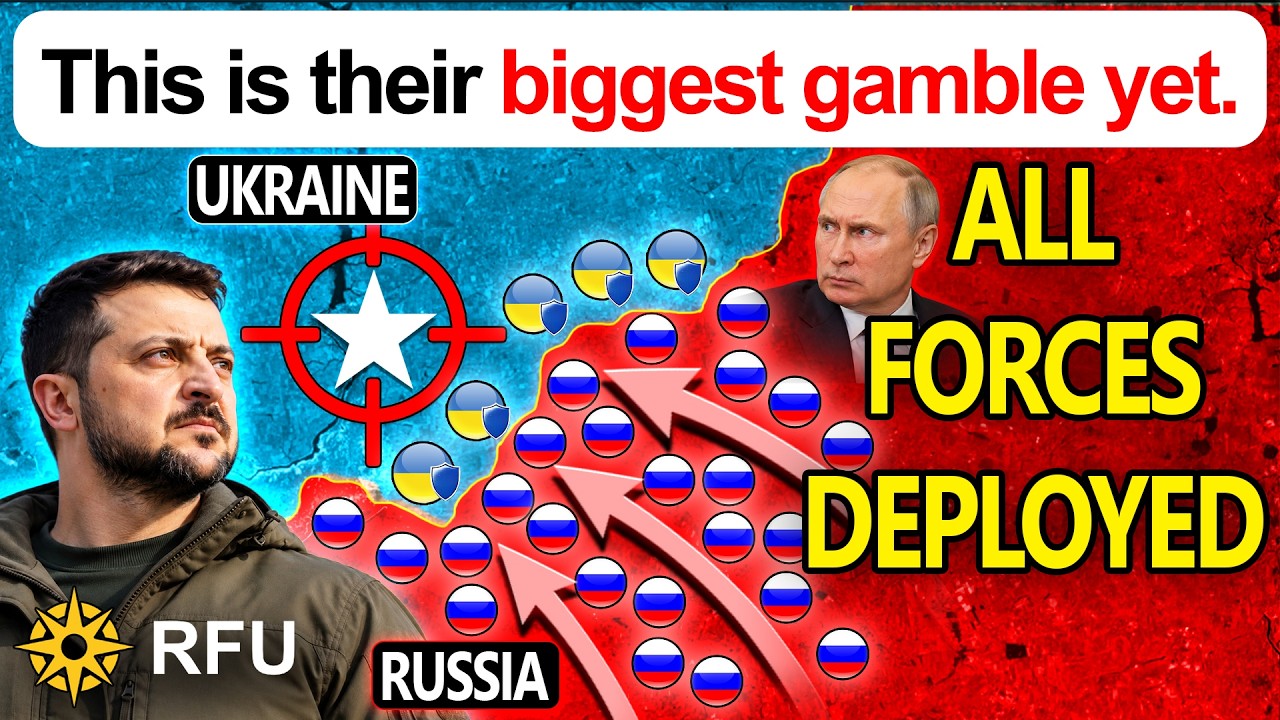
Today, the biggest news comes from the Huliaipole direction.
Russian forces are currently reinforcing the Huliaipolie axis in order to try to break the Ukrainian defense in this sector. Russia’s advantage in manpower is four to one across the wider axis and up to seven to one in the most threatened sectors. This troop concentration indicates that Russia regards the Huliaipolie direction as one of its most important fronts. Here, Russia is using its usual infiltration tactics of sending one to three soldiers at a time, who try to get behind Ukrainian lines and accumulate there, while the use of armored vehicles is minimal. To support its infiltration efforts, Russia deployed three elite Rubicon drone units, which are being rotated through the area to try to cover a wider section of the frontline.
Long-term, Russia wants to capture the left-bank part of Zaporizhzhia Oblast, including Zaporizhzhia city, the regional capital. Russia currently controls approximately seventy-five percent of Zaporizhzhia Oblast, while this figure was around seventy-three percent after the Ukrainian counteroffensive in two thousand and twenty-three. Based on this statistic and their rate of advance this year, which dropped to almost zero in this sector, it is highly unlikely that Russia can achieve its goal. Notably, Russia advanced more than twenty kilometers in two thousand and twenty-five and, by the end of the year, captured Huliaipolie. However, their rate of advance dropped to ten kilometers in two thousand and twenty-six. Given this, it would take seven years for Russia to reach Zaporizhzhia city.
In the short term, the Russian high command has tasked its forces to advance thirty kilometers from Huliaipolie by the end of October. This move would allow them to encircle Orikhiv from the north and cut it off from supplies. Given that Orikhiv is the main supply hub for the Ukrainians here, holding their defense south of the town would be significantly more difficult in case Russia manages to take Orikhiv under its control. However, this goal is also highly unlikely to be achieved in the near future as Russia struggles to make meaningful territorial gains west of Huliaipolie. Notably, the main Ukrainian defense line runs there, which took the Russians approximately eight months to gain a relatively small foothold over it. It consists of extensive anti-tank ditches, dragon’s teeth obstacles, and a series of lines of barbed wire. This is why Russia cannot conduct mechanized assaults here and is forced to rely on infiltrations. Despite getting through the first defense line, Russia still cannot use vehicles to supply its advancing forces or conduct assaults because it couldn’t dismantle the defense line enough to make it easier to pass. After getting through the defense line, which is still constantly monitored by Ukrainian drones, Russian infiltration groups have to go through vast open fields, which are mined. As a result of these conditions, Russia can barely advance here, while its losses are mounting, which has forced it to redeploy troops to try to break the deadlock.
Overall, Russia’s decision to redeploy additional troops and rotate elite Rubicon drone units to the Huliaipolie direction shows that its current tactics are failing to deliver the breakthrough the high command needs. The extensive Ukrainian fortifications, mined open fields, and constant drone surveillance mean that even if Russia redeploys troops here, they will face the same challenges that their comrades failed to overcome. This creates a costly cycle in which Russia must commit more manpower to achieve limited gains, potentially weakening other sectors as troops are diverted to sustain the offensive here. Unless Russian forces find a way to overcome these logistical and defensive obstacles, their ambitions to encircle Orikhiv and eventually reach Zaporizhzhia city will remain far beyond their current capabilities.

🔴 Our interactive news map: https://www.rfunews.com/map
🔴 Subscribe to unlock full access to the map + exclusive strategic insights: https://www.rfunews.com/pricing
In Kursk, a series of devastating Ukrainian strikes has just inflicted new heavy losses on the Chechen Akhmat special forces. As a result, dissatisfaction started growing among the Chechen fighters, with some seeking to abandon the Russian army altogether and switch sides.
As you remember from a previous report, the Ukrainian military intelligence conducted one of its most successful operations against the Akhmat units by infiltrating the formation and managing to place a listening device that exposed their plans, so the Ukrainian forces systematically targeted the Chechen formation.
While Russian security services have likely discovered the bug after suffering those losses, the consequences of the intelligence breach continued to haunt the Chechen unit. Even this didn’t force the Russian command to change location, which allowed Ukrainian forces to remain remarkably effective at targeting Akhmat positions with precision strikes.
One of the most devastating examples occurred in Snizhne, in the Russian-controlled Donetsk region, as Ukrainian FP-Two long-range strike drones targeted a training facility for drone operators and cadets, used by the Seventy-eight Akhmat Special Forces Regiment. The Ukrainian forces launched a coordinated attack involving eleven strike drones, each carrying warheads weighing one hundred kilograms, launching them in successive waves. The main target, a large two-story compound spanning nearly two thousand five hundred square meters, suffered catastrophic damage when ammunition stockpiles stored in the basement detonated during the attack, significantly increasing the strike's destructive effect. Approximately sixty-five Akhmat soldiers were killed, including the commander of the center that housed personnel sleeping rooms, drone assembly workshops, and facilities used for preparing warheads. Geolocated footage from multiple Ukrainian drones showed enormous secondary explosions and the complete collapse of the compound.
Soon afterward, Ukrainian reconnaissance drones easily tracked another concentration of Akhmat forces trying to relocate in Russia’s Kursk region by following them from their starting location. Footage released by Ukrainian operators shows enemy activity in a forest near the border. In a moment, Ukrainian forces launched a Himars strike against the location, with several rockets striking the area one after another. Later footage recorded by surviving Chechen soldiers showed the aftermath of the strike, revealing a large area littered with casualties and destroyed equipment. Around sixty Chechen special forces were killed, while many more were wounded.
Combined with the earlier strike in Snizhne and losses from previous operations, Akhmat units suffered roughly two hundred fatalities within a relatively short period. The significance of these losses extends beyond simple numbers, as repeated strikes against staging areas, training grounds, and concentration sites have reportedly caused growing frustration among Chechen fighters, many of whom believe their commanders have repeatedly exposed them to danger while failing to provide adequate protection.
This frustration became visible during a recent Ukrainian search-and-destroy operation, when a Ukrainian patrol encountered three Akhmat soldiers who voluntarily approached Ukrainian positions. After securing them, Ukrainian forces reportedly learned that the men were not simply seeking to surrender. Instead, they expressed a desire to join the ranks of Chechen volunteers already fighting alongside Ukraine, within formations such as the Sheikh Mansur Battalion. The captured soldiers expressed anger toward pro-Russian Chechen commanders and blamed them for the deaths of many of their compatriots. Rather than continuing to fight for Russia, they wished to switch sides and participate in operations against Russian forces.
Overall, many Chechens fight not only for military or financial reasons, but also because of deeply rooted questions of identity, nationalism, religion, and historical memory. The legacy of the Chechen wars remains powerful for many families, and resentment toward Moscow has never fully disappeared. As losses continue to mount and confidence in pro-Russian leadership weakens, some fighters appear increasingly willing to reconsider where their loyalties lie. If Russia's broader position continues to deteriorate, such tensions could become even more significant, particularly in regions that maintained strong independence movements after the collapse of the Soviet Union and where old grievances remain very much alive.

🔴 Our interactive news map: https://www.rfunews.com/map
🔴 Subscribe to unlock full access to the map + exclusive strategic insights: https://www.rfunews.com/pricing
Today, there are interesting developments in the Sumy direction.
Here, starving Russian soldiers are now killing each other at food depots, as the neglected front and deteriorating logistics situation is nearing a breaking point. As the Russian high command has seemingly neglected this front for too long, Russians are crossing the trenches and surrendering crucial intelligence in exchange for a warm meal.
After the fighting around Kursk stalled and left Russian forces exhausted, this sector appears to have slipped down the priority list. The troops left there were still expected to hold the line, but with too few deliveries, too few replacements, and too little command attention to sustain it properly. As food, ammunition, and basic supplies arrived late or in insufficient amounts, positions could still appear occupied on the map while the soldiers inside them were increasingly left unable to defend or even survive properly.
The clearest breaking point came when the shortage turned violent inside the Russian ranks. According to radio intercepts, personnel from the Russian Thirtieth Regiment and the Eight Hundred Tenth Marine Brigade were dividing a warehouse of provisions in the Kursk region when the situation escalated into a shootout. These were not Russian soldiers fighting Ukrainians over a position, but Russian units opening fire on each other while trying to secure food for themselves, making the shortage visible not as poor morale, but as a breakdown inside the rear itself.
The same pattern had already appeared during the winter in an even more primitive form. In one reported case, four Russian infantrymen who had been sent into the Sumy area were left without proper logistical support and began searching for food. Instead, they wandered into Ukrainian positions by accident, where fighters from the Forty Seventh Separate Mechanized Brigade took them prisoner. That incident shows that the collapse in this sector had already begun shaping behavior months earlier, as these soldiers were no longer trying to hold their positions, but simply to survive the conditions imposed on them by their own side.
The same logic appeared again in April, when a Belarusian volunteer serving with Russian forces tried to surrender in the Sumy region. While attempting to reach Ukrainian lines on his own, he stepped on a mine and had to be rescued after Ukrainian soldiers heard his screams. One of the Ukrainian fighters reportedly carried him for ten kilometers through mined terrain so he could later be exchanged for a captured Ukrainian soldier.
That same breakdown soon began to show up directly on the battlefield, when Ukrainian forces moved into Andriivka with very little resistance. In most contested sectors, even small Ukrainian movements are usually detected quickly and met by Russian FPV drones or surveillance strikes before troops can move far into defensive positions. Here, however, footage from the Sumy sector showed Ukrainian troops moving through tree lines and systematically destroying dugouts with anti tank mines step by step before any meaningful Russian response arrived. Russian FPV strikes only appeared later, after Ukrainian troops had already entered positions previously treated as Russian held. This suggested that the Russian side was reacting to Ukrainian advances after they had already happened, rather than stopping them as they unfolded. Because drones are often Russia’s fastest way to compensate for weak infantry presence on the ground, the delayed response indicated that local Russian defenses in this area were already operating more slowly and less effectively than normal.
Overall, these developments show that a front can still look stable on the map even when it is already failing in practice. On this sector, the damage becomes visible only when Ukrainian troops start moving through areas that Russian forces can no longer hold properly. That is what makes this kind of decay dangerous for Russia, because the front may look intact until Ukrainian pressure shows that parts of it are already weaker than they appear. If this continues, Ukraine is likely to find more openings here before Russian command fully understands how fragile the sector has become.

💎 Special Offer: starting from just $4.99! Get 50% OFF full access to the map + exclusive strategic updates: https://www.rfunews.com/pricing
In this video, we will analyze the Ukrainian counterattack north of Li-man.
Here, after months of costly assaults, Russian attempts to advance were stopped dramatically by the Ukrainians. However, the Ukrainians did not simply sit behind their defensive lines waiting for the enemy to attack again, and prepared a plan to break the Russian lines wide open.
As Russian combat power and offensive capability drained, the Ukrainians maintained an active defense. The Ukrainian Third Army Corps conducted repeated local counterattacks, supported by artillery strikes and drone operations, which continuously drained Russian manpower and resources, preventing them from launching larger assaults. However, Ukraine was quietly preparing something larger.
The timing reflects months of preparation, as once Russian advances stalled, Ukrainian commanders gained the opportunity to rotate forces, improve logistics, accumulate reserves, and conduct extensive reconnaissance efforts. At the same time, Ukrainian strikes continued to degrade Russian supply routes over the Zherebets River by targeting pontoon bridges. As a result, by the time Ukrainian forces launched their offensive, Russian formations had already suffered heavy attrition while being stretched across an increasingly vulnerable salient.
As you remember, Ukrainians had jump-started their counterattacks by launching a deep breakthrough into the northern part of the Russian salient. Now, Ukrainians built on that momentum and quickly retook control of a forest strip to the west of here. This pincer attack cuts off consolidated Russian control over Ridkodub and places Russian soldiers inside in an operational encirclement.
However, the assaults did not end there; to the south, Ukrainians conducted a similar pincer maneuver on Russian forces in Shandriholove, cutting off Russian control of Serednie. While Russian forces in these pockets are not fully encircled, Ukrainian pressure on their rear means that any and all Russian reinforcements sent in are immediately tied down between the Ukrainian pincers. This then allows continuous FPV drone strikes to degrade Russian positions before Ukrainians move in and clear the full area without taking any friendly casualties.
Importantly, the Ukrainian Third Army Corps is extensively using ground attack drones to achieve its successes, as seen in various footage from the area. These ground drones allow Ukrainian soldiers at the tip of the pincers to maintain stable supply lines, with these robots being extremely resistant to Russian artillery and mortar fire, and even Russian FPV strikes.
Additionally, ground attack drones play a major role in their ground assault operations. Smaller vehicles akin to remote-controlled toy cars are strapped with explosives and driven straight into Russian bunkers or buildings, detonating and collapsing entire structures and strongpoints full of Russian soldiers at barely any cost.
Then, on the larger drones, Ukrainians mount heavy machine guns to engage Russian soldiers directly or suppress enemy positions, allowing Ukrainian assault troops to close the distance safely. These machine-gun ground drones excel at their task, as on the Ukrainian battlefield, staying light and mobile during an assault can mean the difference between life and death for soldiers under heavy enemy drone observation and strikes, as well as drawing enemy fire onto the way more heavily armored ground drone.
As Ukrainian forces expanded their breakthrough, Russian commanders attempted to rush reinforcements across the Zherebets River to stabilize the front. Understanding the importance of preventing this, the Ukrainians took countermeasures, and these efforts quickly turned into another series of disasters. The Ukrainians have established firm FPV fire control over the crossings, preventing the enemy from reinforcing the areas under Ukrainian attack. Released footage shows even single Russian soldiers being targeted while trying to cross the river, while the vehicles used to transport them to the crossing points are also hunted down by Ukrainian drone operators.
Overall, the Ukrainian counteroffensive against the Russian salient near Li-man is steadily producing results by combining sustained attritional pressure with carefully prepared offensive operations. The Ukrainian forces have expanded their breakthrough and placed the entire salient under increasing risk of collapse, while the extensive use of ground drones continues to preserve Ukrainian lives while improving their battlefield effectiveness, allowing Ukrainian commanders to maintain relentless pressure on increasingly strained Russian forces. Through these developments, the Ukrainian battle to eliminate the Russian salient north of Li-man is showcasing how Ukraine transforms active defense into an offensive opportunity.

🔴 YOU ARE MISSING HALF OF OUR VIDEOS! Subscribe to unlock all our reports and support our work: https://www.youtube.com/channe....l/UCcNB1tZYpeDetqCad
Today, there is important news from Ukraine.
Here, as Starlink internet access remains cut off, Ukraine is demonstrating that it has enough capabilities so that it is not out of the fight just yet. As the cutoff has severely disrupted high-speed drone controls, Ukraine’s domestically developed missiles just delivered the most devastating strike against Russian airbases this year.
In the middle of the night, Russian observers reported a large number of high-speed missiles flying into Russian territory, as air raid warnings were declared across numerous regions. The target, Russia’s major Borisoglebsk military airbase in the Voronezh region, housing the largest component of Russia’s military aircraft launching frontline glide-bomb strikes against Ukraine. Footage shows major fires lighting up the clouds in the night sky. Local residents filmed major flashes of light followed by loud explosions coming from the direction of the airfield. Finally, footage was published showing one of the impacts itself, with a massive fireball climbing up into the sky, suggesting that a major munitions depot was hit among the strikes.
In the aftermath, satellite footage was released showing that the damage was far more extreme. Six Russian Su thirty-four fighter-bombers had been destroyed in the blasts. Four wrecks are visible lining the tarmac, while who more fire marks on the asphalt suggest that two more were caught in the blast and were severely damaged. These aircraft are key in launching Russian glide bomb strikes against Ukrainian frontline positions. They are able to carry the most out of all Russia aircraft simultaneously, and are therefore used most extensively as well. As Ukrainians are unable to counter Russian glide bombs without further-reaching missiles, the only way for Ukraine to disrupt the strikes is by targeting the aircraft and the bombs while on the ground. And the destruction of six of these aircraft is a significant loss for Russian air-support capabilities.
For the strike, Ukrainians used their own domestically produced Neptune missile systems. Ukraine has long used the missiles that sunk the Russian Black Sea flagship the Moskva in ground-attack roles as well, proving itself an effective weapon against the highest Russian targets. Just like these missiles, the Starlink cutoff recently imposed on Ukraine does not completely dismantle Ukraine’s long-range strike capabilities. The missiles used for these strikes are either guided through a ballistic trajectory, have inertial guidance systems, or use radar-homing to lock on to their targets, not relying on any Starlink connection. Ukraine’s long-range drones similarly rely on a multitude of AI systems, pre-programmed flight paths, varied satellite constellations, and sometimes even high-altitude balloon relays for guidance instead of Starlink. It’s also important to understand that long-range strikes are mostly conducted against static targets, meaning that the drones or missiles do not need to be piloted by Ukrainian operators using Starlink to fly to their targets, unlike most mid-range strike drones and interceptor drones. This is where the disruption has the most effect. Not against Ukrainian strikes against Russian oil and energy infrastructure, but in protecting civilians against Russian Shahed terror attacks and in undermining Russian offensives by the mid-range strikes. Because long-range strikes are now the only thing Ukraine has left to pressure Russia, Zelensky has officially lifted the ban on refinery strikes, which was initially imposed to precisely to approach Trump’s dealmaking efforts.
Overall, while Ukraine had halted strikes on Russian energy facilities for three days at Washington’s request, Russia continued striking Ukraine’s energy infrastructure and cities, prompting Zelensky to state that enough is enough and cancel the order. With Starlink speed limitations only affecting Ukraine’s ability to defend itself, the long-range strikes will continue with renewed determination. Ukraine has plenty of domestic systems that will continue to strike Russia’s airfields, ammunition depots, and refineries deep inside Russian territory independent of Washington’s imposed limitations on Starlink. Zelensky added that for Ukraine, this is not a game, deal, or politics, but rather the continued survival of their country and its citizens.

💎 Help us expand the coverage! Subscription starts from just $4.99! Get 50% OFF full access to the map + exclusive strategic updates: https://www.rfunews.com/pricing
Today, the most important news is coming from the European border.
Here, Russia has begun massively intensifying its strikes on the Ukrainian border with its neighboring Nato allies. Aside from disrupting crossings and transport of civilian and military logistics, the most recent strike nearly killed several prominent Western figures. A train carrying former Western political leaders returning from a conference in Kyiv nearly escaped the Russian strike, with a drone hitting the train only a few minutes behind it. Ukraine’s national railway company stated that the likely target of the Russian drone strike was indeed the Western diplomats, as the departure time of their train had been switched at the last moment to avoid such an exact strike. While the train that was hit had been evacuated as soon as Russian drones approached and no civilians were killed, the attempted murder of former Swedish and British prime ministers by drone strike is a new level of escalation.
Recently, Russian provocations against Nato have been massively intensifying, both in number and severity. Russian strikes are now frequently landing within a few hundred meters of Nato territory, and airspace violations by Shahed drones are happening on an almost weekly basis. Notably, geopolitical experts believe that this is by design; Russia wants Nato to respond. They argue that Putin is looking for a defining Nato action against Russia, to create a rally-around-the-flag effect and use it to garner support for a new round of mobilization. Notably, the Kremlin is deathly afraid of calling up another round, and has taken extensive measures to prevent and quell unrest, to the point of experimenting with Iran-style nationwide internet blackouts to undermine protesters’ ability to coordinate. However, if Nato attacks Russia in some way, major unrest against a mobilization can be avoided if the Kremlin plays their cards right, and it is becoming more transparent by the day that this is exactly what they intend to provoke.
The most notable attempt of this was the failed kamikaze drone strike on a Ukrainian cargo plane at Leipzig airport. The aircraft was meant to transport military supplies gathered at a depot near the city, and fly it to the border with Ukraine for further transportation. The saving grace occurred when the FPV drone carrying eight-hundred grams of explosives failed to detonate and crashed against the wing of the plane. Later, a suspected reconnaissance drone investigating the failed attack crashed against another aircraft that was diverted after the earlier drone wreckage was found and the airport was closed. Despite the tame official response of the German government, closing a consulate, Russian culture house, and establishing a special police unit to counter drones and protect critical infrastructure, Lavrov called the response the beginning of a real war, adding that Germany is now moving toward war with Russia. The disproportionality of the Russian reactions only further underscores the theory that the Kremlin is trying to fabricate an excuse for mobilization that the Russian public will accept.
Additionally, Bulgaria is investigating the second major fire at a weapons storage facility run by Bulgaria’s largest military producer, which also sells weapons to Ukraine. This is the second fire and explosion to hit an EMCO facility in recent weeks, as investigations center around uncovering ties with Russia. In turn, Romanian intelligence recently stated that they spoiled a Russian sabotage operation targeting Romanian and Nato military bases, headquarters, and critical infrastructure, along with another Ukrainian Antonov transport plane. Danish intelligence also released a report detailing how Russia is actively preparing sabotage operations against defense manufacturers and military facilities inside the country. Lastly, at the start of the month, an unknown intruder broke in and set fire to a Polish drone factory, with Prime Minister Tusk stating there is no doubt that it was sabotage, and intelligence services investigating Russian involvement.
Overall, while the Russian plan to trigger a Nato response and justify a mobilization to Russian society is extremely clear, the right course of action for the West is not. The attacks that happened only in the last two weeks are subversive and indirect; the Leipzig attack targeted a Ukrainian plane on German territory, not directly a Nato plane. Cyber, stabotage, and intelligence operations are carried out by third parties. The near-miss on the delegation train at the border did not include official diplomats or leaders, but only former politicians and unofficial VIP’s.

این هفته در «برنامه با کامبیز حسینی»، ماراتن تریبون آزاد برگزار میشود؛ تا پنجشنبه، موضوع برنامه را شما تعیین میکنید!
اگر فقط فرصت داشتید یک جمله به یک ایران بگویید، چه میگفتید؟

موضوع این قسمت از «برنامه»، بازگشتهای گزینشی و معاملات امنیتی است. میپرسیم: چرا حق بازگشت به وطن به امتیاز تبدیل شده است؟ قانون اساسی، تابعیت ایران را حق هر ایرانی میداند.
امشب در «برنامه با کامبیز حسینی» از فاصلهای میگوییم که میان آدمها و خانهشان افتاده است.

این هفته در «برنامه با کامبیز حسینی»، ماراتن تریبون آزاد برگزار میشود؛ از امشب تا پنجشنبه، موضوع برنامه را شما تعیین میکنید!
اگر فقط فرصت داشتید یک جمله به یک ایران بگویید، چه میگفتید؟

اگر فقط یک جمله فرصت داشتید با ایران حرف بزنید، چه میگفتید؟ «برنامه» امشب، تریبون آزاد شماست. تاریخ با صدای شما نوشته میشود.

هر روز صبح با خبر اعدام بیدار میشویم. امروز، ۱۳ مهر، علیرضا سپاهی و علیرضا رئیسی، دو متهم پروندهٔ «میدان علیخانی» اصفهان و از معترضان خیزش دی، در زندان دستگرد اعدام شدند. علیرضا سپاهی یک روز پیش از اعدام، در زندان با نامزدش، مهشاد کشانی، ازدواج کرد؛ زنی که خودش با حکم پنج سال زندان روبهروست. حدود دو ماه پیش، قرار بود علیرضا را همراه پسرعمویش اعدام کنند، اما او پیش از انتقال سکته کرد. پسرعمویش همان روز اعدام شد و علیرضا، ۶۹ روز بعد و یک روز پس از ازدواجش، اعدام شد.

ساندیتایمز گزارش داده است دو پنتهاوس لوکس مرتبط با شبکهٔ مالی مجتبی خامنهای، در ساختمانی مشرف به کاخ کنزینگتون لندن، برای فروش گذاشته شدهاند؛ دو ملکی که مجموعاً نزدیک به ۳۶ میلیون پوند خریداری شدهاند.
کامبیز حسینی در «برنامه» به این موضوع میپردازد.

قیمت بنزین با کارت جایگاه یکشبه دو برابر شد؛ از پنج هزار تومان به ۱۰ هزار تومان رسید. اما این گرانی سر پمپ نمیماند؛ به کرایهها، قیمت کالاها، دخل رانندهها و سفرهٔ همهٔ مردم میرسد.
گرانی بنزین کجای زندگی شما را هدف میگیرد؟
ما در «برنامه با کامبیز حسینی» بهدنبال روایتهای واقعی از زندگی مردم هستیم تا صدای واقعی مردم ایران را بازتاب دهیم.

دیشب عرفان از بندرعباس، در میان صدای انفجار، روی خط «برنامه» آمد و گفت: «ما دیگر عادت کردهایم.» این موضوع امشب «برنامه» است: آیا ما به جنگ عادت کردهایم؟

پولتیک برنامه ای است ویدئویی و آنلاین با اجرای کامبیز حسینی.

#Iraninternational #ایران_اینترنشنال

تجمعی که برای «خودجوش» شدنش به مداح، بلندگو، دوربین تلویزیون، پذیرایی و خیابان اختصاصی نیاز دارد، دیگر خودجوش نیست؛ فنکلاب حکومتی است!
مسئله، حق تجمع نیست؛ تجمعکردن حق همه است. مسئله، تبعیض است: چرا طرفداران حکومت میتوانند با حفاظت کامل خیابان را ببندند، اما پاسخ مردم معترض باتوم، بازداشت و گلوله است؟
مردم ایران دربارهٔ این تجمعهای شبانه چه میگویند؟
کامبیز حسینی در «برنامه» به این موضوع میپردازد.
«یک ایران صدای شما را میشنود»
دوشنبه تا پنجشنبه ۱۱ شب تهران
از تلویزیون ایران اینترنشنال

«طنز خوشمزگی نیست»؛ برای جواد مجابی، طنز فقط وسیلهای برای خنداندن نبود، بلکه راهی برای به پرسش کشیدن قدرت، سنت و باورهای مسلط بود.
جواد مجابی، شاعر، نویسنده، طنزپرداز، روزنامهنگار، نقاش و منتقد ادبی و هنری، ۱۴ شهریور از دنیا رفت. او میان شعر و داستان، طنز و سیاست، روزنامهنگاری و پژوهش، و کلمه و تصویر پل زد؛ تاریخ طنز و هنر معاصر ایران را ثبت کرد و از آزادی و استقلال نویسنده دفاع کرد.
کامبیز حسینی در «برنامه» یاد جواد مجابی را گرامی میدارد.

این آخرین «برنامه با کامبیز حسینی» در سال ۱۴۰۴ است؛ سالی که یک سال نبود. سالی که زمان در ایران از کار افتاد و هر نفسش بوی امید آزادی میداد و هر روزش به اندازهٔ یک عمر گذشت. ما در این سال زندگی نکردیم؛ دوام آوردیم. آزادی، تنها راهِ بازپسگیری عمری است که از ما گرفته شد. برنامهٔ بعدی ما دوشنبه، سوم فروردین است.

امشب، تریبون آزاد «برنامه» بود. مخاطبان از سراسر ایران و جهان روی خط آمدند و این بار خودشان موضوع برنامه را تعیین کردند. مردم از زندگی، دغدغهها، خشمها، امیدها و واقعیتهایی گفتند که در هیچ جای دیگری شنیده نمیشوند.
